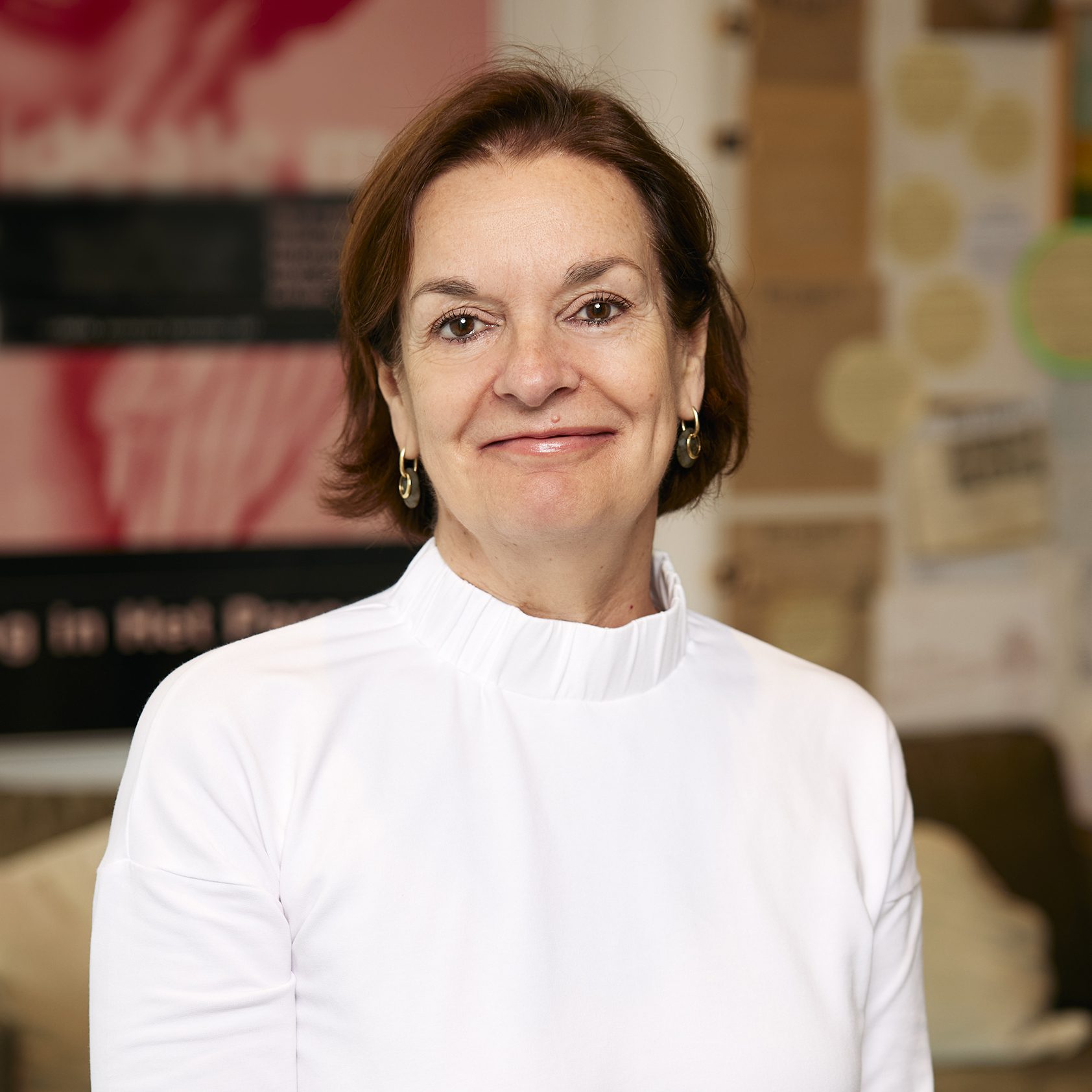
Meet Thomas Boeschoten, our new Senior Policy Advisor for Media and Tech
Thomas Boeschoten has been Senior Policy Officer for Media and Technology at the Democracy and Media Foundation since March. Boeschoten founded the Utrecht Data School, worked at the Algemeen Dagblad, and led the data and innovation team at DPG Media. “What is quality journalism in this day and age, when we have access to all the information in the world at the touch of a button?”
You wrote on LinkedIn that you quit your dream job to come work at SDM. Why?
“I couldn’t really believe it myself: going from a large company with thousands of employees to a small, idealistic foundation. I was working with incredibly interesting data on reading behavior related to stories from major media outlets—that was my dream. But I couldn’t really channel my idealism there. And then, last year, an op-ed by SDM’s director, Nienke Venema, was published. The piece was about DPG’s acquisition of RTL. I was so impressed by it.”
Why?
“The easy position to take on the RTL takeover was to oppose it. I think that view was widely shared, based on the idea that a concentration of power is undesirable. The op-ed, however, actually argued in favor of the takeover. SDM’s analysis showed that DPG’s acquisition of RTL would be better for the diversity of the Dutch media landscape.”
What that opinion piece showed me above all is that SDM engages in thorough analysis—much more in-depth than most people and organizations do. According to SDM’s analysis, if the acquisition were to fall through, there would be a high probability that RTL—and thus RTL Nieuws —would be acquired by a foreign party. That party would be primarily interested in Videoland, and it would remain to be seen whether they would allow RTL Nieuws to continue operating. That is now very well safeguarded at DPG.’
You’re talking about your “idealism.” What do you mean by that?
“I’ve been concerned for some time now about the state of our society. I think the media—and by that I mean the new media as well—could do more to fulfill their democratic role.”
Wouldn’t it be better to put those ideals to use at a media company?
“At DPG, I’ve always been committed to working with data and innovation in an ethical and responsible way. But the primary goal of a media company isn’t to save democracy. In a world where traditional media companies are under pressure, it’s becoming increasingly difficult for newsrooms to produce journalism that’s both relevant from a democratic perspective and captures the public’s attention. Important stories are usually not “sexy” according to the rules of platforms and the public.”
Journalistic media outlets are now often dependent on platforms they don’t own themselves. They are trying to regain that ownership, but it’s a huge and difficult struggle. That’s something that really keeps me thinking: How can newsrooms operate independently of those platforms again? What is quality journalism in this age when we have access to all the information in the world at the touch of a button? There’s no good answer to that yet. At SDM, we’re actually working a lot on these issues. For me, the move comes at a logical moment.”
What will you be doing at the Democracy and Media Foundation?
“In my first year, I want to explore where the greatest challenges lie in terms of technological developments in our diverse media landscape and our democratic constitutional state. Based on those insights, we’ll develop interventions: what can we do about this?”
Two major issues are already standing out. First: What laws and regulations—including enforcement measures—do we need to curb the power of global tech companies? Second, the viability of the media: how can they continue to provide us with quality information ten years from now? And by that, I don’t just mean traditional media—it’s also particularly interesting to explore ways for new media to fulfill their democratic role.”
SDM is also a non-voting shareholder of DPG. Does it still cause any friction that you come from there?
“No, not at all. Ultimately, both DPG and SDM have the media company’s best interests at heart. The foundation offers constructive and critical input on an issue that concerns us all: journalistic independence and internal pluralism. It’s actually quite useful: I know DPG very well, and I can bring that perspective to SDM.”
You previously founded the Utrecht Data School. “Connected scientists are actively shaping the digital society and researching how citizenship and democracy are changing as a result of datafication and algorithmization,” I read on their website.
“They’ve become much more professional in the meantime, but that was already our approach back then. We were interested in what we called ‘the datafication of society.’ We conducted research on the online public sphere and fragmentation on social media—how people come together in sub-communities that shape their experience. We wrote academic papers and journalistic articles, such as for *De Groene Amsterdammer*, about how far-right ideas are becoming mainstream via Twitter.”
Are you an optimist or a pessimist when it comes to tech?
AI is here to stay, and I’m optimistic about the opportunities it offers organizations and companies in the short term. But so far, I view its long-term impact as extremely negative and disruptive. It’s built on questionable practices by stealing copyrighted content, including from news organizations. It undermines the revenue models of independent newsrooms by bypassing them. We must ensure that it remains worthwhile to practice original journalism, even in times when people are accustomed to the convenience and comfort of chatbots.
It’s a shame that Big Tech is still so unprincipled. Take TikTok, for example—at its core, it’s a brilliant platform. It learns incredibly quickly what interests you as a user, and it’s highly addictive. Imagine if you were to use that technology to share important stories and relevant information with citizens and make us more resilient as a democracy, instead of promoting the manosphere, for example. Platforms can make choices in this regard.’