Opinion: It is time for a fundamental debate about our media consumption
This opinion piece appeared on Wednesday, July 15, in de Volkskrant. Read the original here.
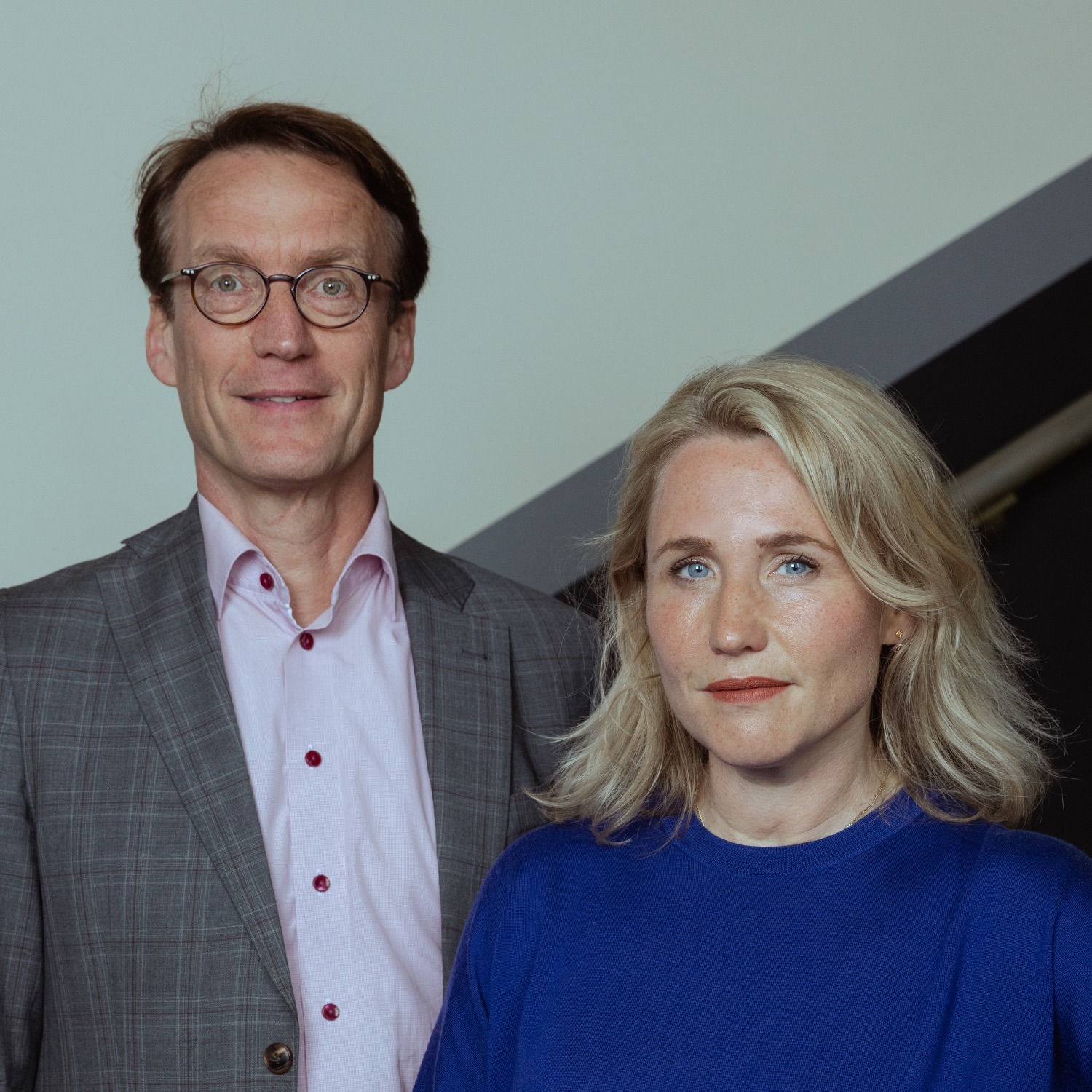
There is more information available than ever before, write Nienke Venema and Kees Kraaijeveld. This is a wealth for those who want to know more or share information with others. But the abundance also brings uncertainty. Is what you read and see true? Do you know if the sender is legitimate? It is time for a major media debate.
The fact that you are still reading this article is almost remarkable. In 2018, 61 percent of Dutch adults were still genuinely interested in the news; now that figure is 45 percent. The group of people with no interest in news at all has nearly quadrupled in eight years: from 4 to 14 percent, according to the latest Digital News Report from the Dutch Media Authority. 14 percent: that represents more than 2 million people.
Our growing lack of interest is linked to a rapid and global upheaval. We are in the midst of a new information revolution. Consider the success of the smartphone and social media. Of the 8.3 billion people worldwide, nearly six billion now have a social media account. Consider also the meteoric development of Artificial Intelligence (AI). The use of AI chatbots, such as ChatGPT or Claude, is growing rapidly. Among Dutch youth between 18 and 24 years old, 90 percent already work with AI regularly.
This new reality means that more information is available than ever before. This is a wealth for everyone who wants to know more and share information with others. But the abundance also brings uncertainty. Is what you read and see true? Do you know if the sender is legitimate? Is the image presented to you fabricated, or is it reality? Concerns about disinformation and fake news are growing. More than half of the Dutch population (51 percent) is concerned about this, according to the same study. We feel that we no longer have a grip on the reliability of information.
Changed in character
Social media have changed in character. They began as platforms where you primarily decided for yourself whom you followed. But now you are fed by algorithms that hold your attention without giving you a say. Take TikTok: by the end of 2025, more than 70 percent of all video views there came via the algorithmic For You Page. The profit-seeking of Big Tech holds us in its grip. This is particularly harmful because these companies are not held accountable for their behavior. They act as if their algorithms simply appeared out of thin air.
The information revolution is transforming our relationship with media. This also has two sides. On the one hand, technology makes it possible for anyone with a smartphone and an internet connection to report and distribute the news themselves. A variety of new voices have emerged, such as Bender, CestMocro, and Left Laser, with hundreds of thousands of followers. On the other hand, traditional Dutch news media are losing reach and revenue because social media and AI consume our attention and their advertising income.
Increasingly pressing
The age-old information paradox is becoming increasingly pressing: more information is coming at us than ever, but we can do less and less with it. This not only feels uncertain but is also dangerous for our society. A democracy cannot function without dialogue between citizens who have access to reliable information to freely form their own opinions. How can we still be a country together with rules, agreements, and laws if everyone lives in their own reality?
These are crucial questions. We have ended up in a sea of fake news, algorithms, and AI slop. Many of us no longer believe in the traditional methods of journalism and science. It is a conclusion as strange as it is worrying: we have lost interest in news, our trust in traditional journalism is declining, while we claim to find reliable information important.
Big Tech
What is to be done? There is no other choice but to form our thoughts on this together as residents of the Netherlands. This upheaval is too large and too important to leave solely to media experts, media companies, politicians, or Big Tech with its totalitarian tendencies. It is essential that we also form a vision of where our derailing information society should go. We must answer the question ourselves of how we want to renew and improve our public information provision. By engaging in conversation with one another. Online, on TV, on the street, in theaters, in community centers, and even here in the newspaper.
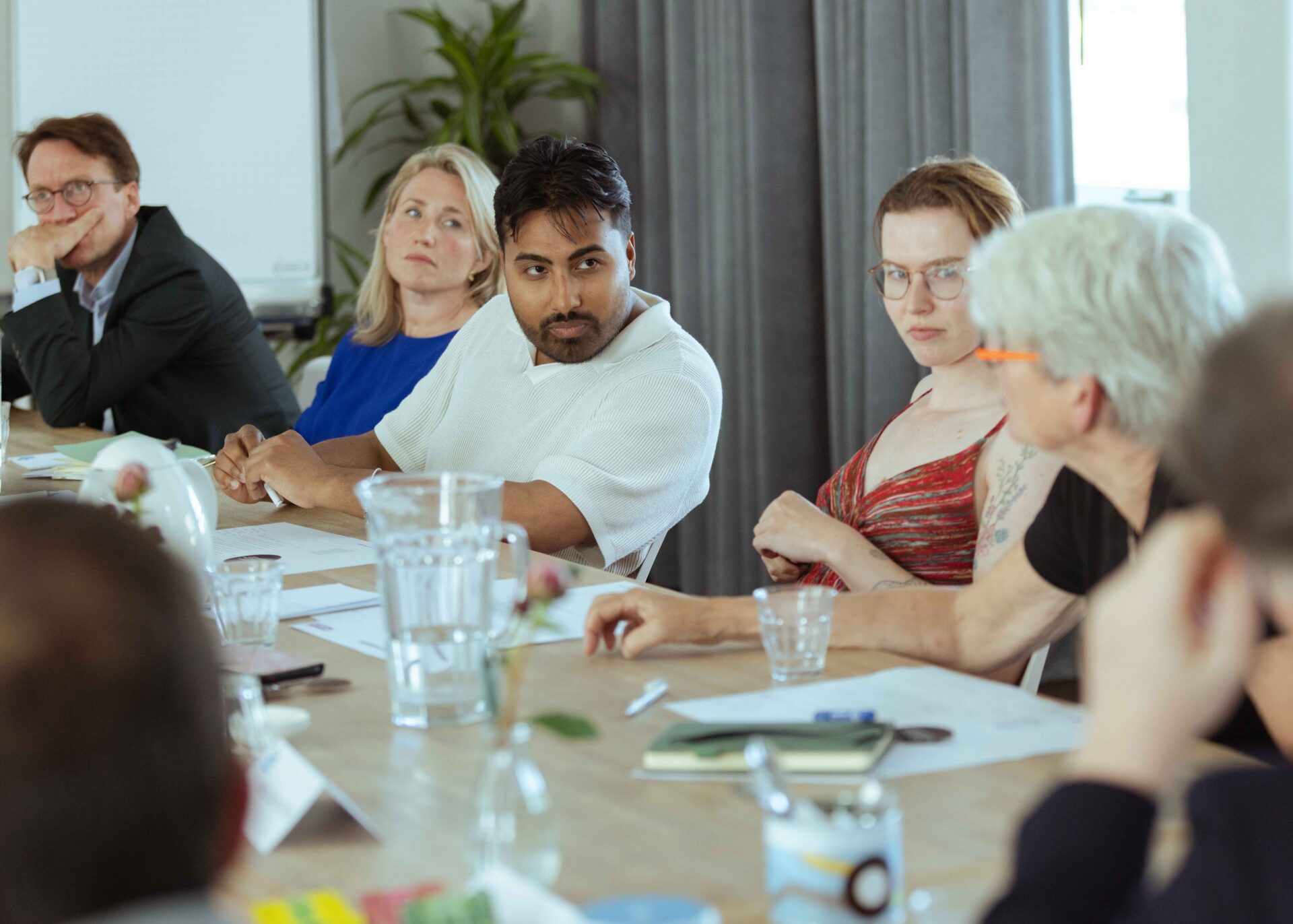
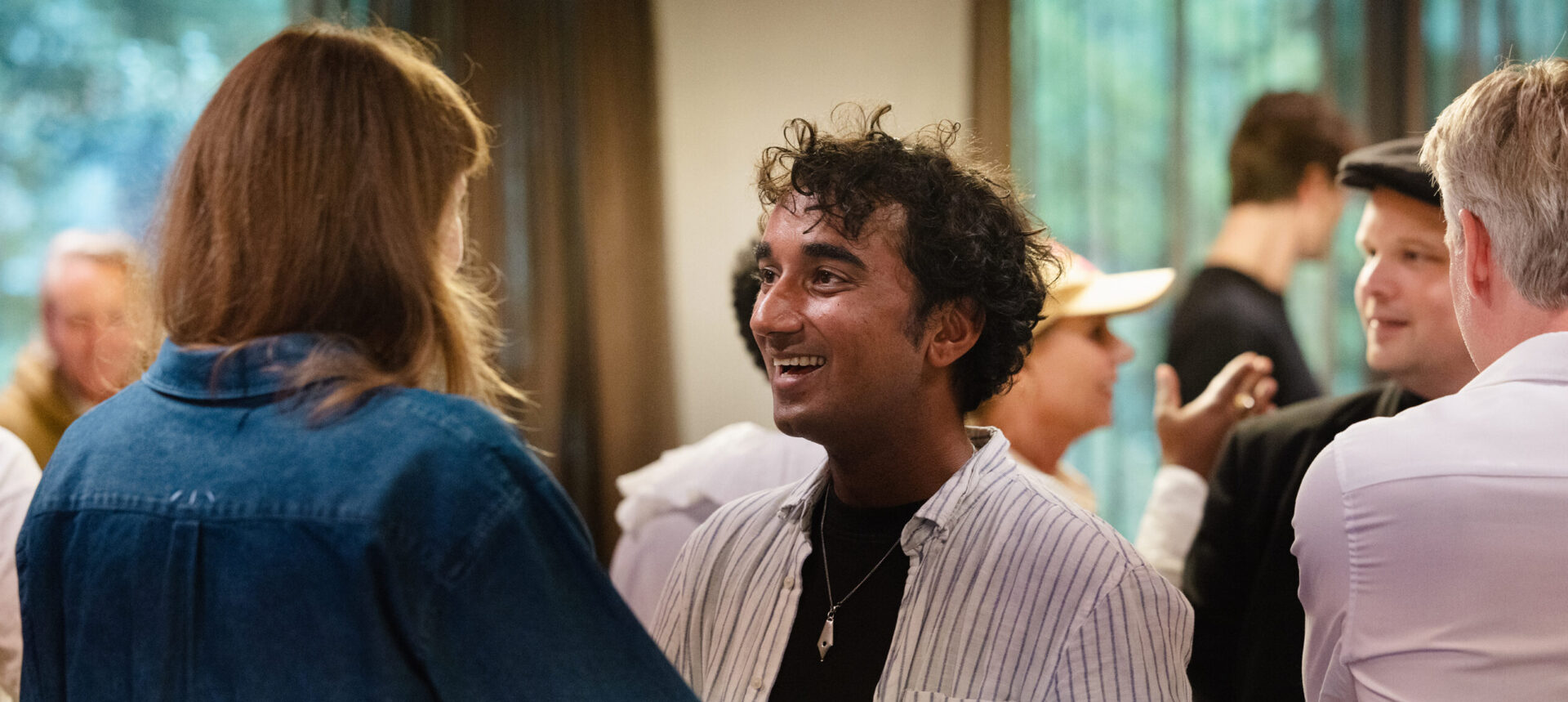
Everyone is welcome. That is why Stichting Democratie en Media, De Argumentenfabriek, and NU.nl began ‘The Great Media Debate’ this summer. In the spirit of the Agendas that de Volkskrant organized twenty years ago, we are going to bring people together to talk about our future, the concerns we have, and how we can regain a grip on our news. In the coming months, we will organize physical media meet-ups throughout the country, engage with experts, and stimulate the debate online together with Nu.nl.
Reliable information is indispensable for our democracy. There are many threats, but there are also many possibilities. Big Tech seems all-powerful, but what do we want ourselves? We must think about that together, while we still can. In the interest of our democracy.
Photo: Juliette de Groot
Addition on July 22, 2027: This piece initially unintentionally contained an unfortunate phrasing that we would like to correct. We described the broader trend of traditional news media losing reach and revenue due to social media and AI. This general development is also described in the Digital News Report 2026. In doing so, we used NOS and NRC as examples, from which it could be wrongly inferred that they in particular were losing out. That is incorrect, and we regret the error.
News and articles