Farewell letters from Parool resistance fighters: ‘Your son did not fall in vain’
On February 5, 1943, thirteen staff members of the underground newspaper *Het Parool* were executed by firing squad—exactly eighty years ago in 2023. The Democracy and Media Foundation owes a debt of gratitude to these men. They wrote farewell letters to their families containing words of comfort, gratitude, and pride. Jan Zwanenburg and Robert Douma were two of them. “We died for our ideals.”
Text: Hanneloes Pen
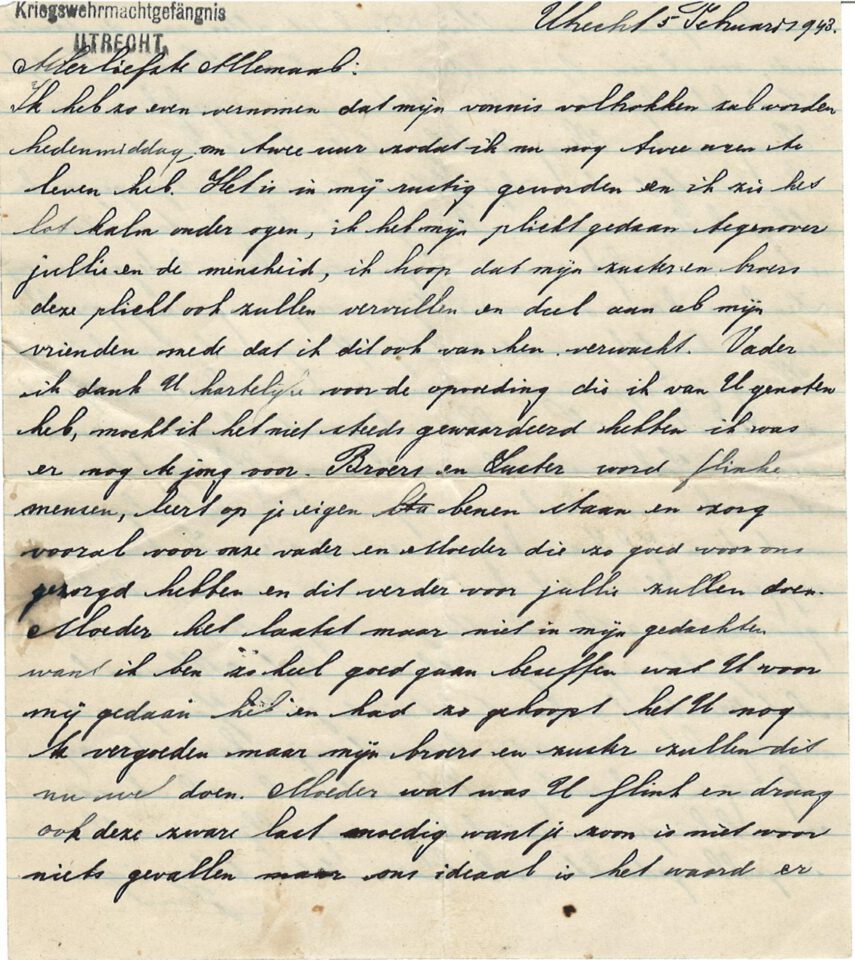
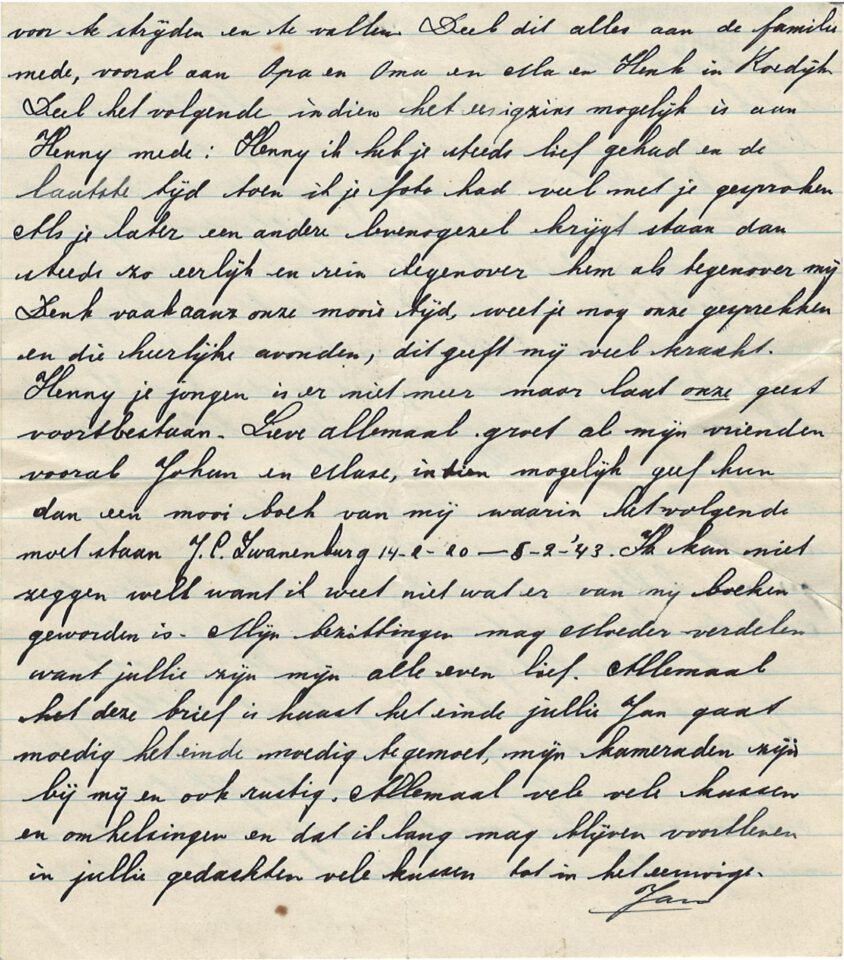
The farewell letter from 22-year-old Jan Zwanenburg, a tram conductor for the Amsterdam Municipal Tram who had been sentenced to death, shows not a glimmer of hope for survival. Until the very last moment, he had fervently hoped for a pardon, but on February 5, 1943, he felt the ground give way beneath his feet. At 10:30 in the morning, he learned that he and his colleagues from *Het Parool* would be executed by firing squad at 2:00 p.m.
With mixed emotions, he wrote a letter from the Kriegswehrmachtsgefängnis in Utrecht to say goodbye to his family and his beloved. “I have found peace within myself and face my fate with composure; I have fulfilled my duty to you and to humanity,” he writes, and he also thanks his father for the upbringing he received. To his brothers and sister, he says: “Grow up to be strong people; learn to stand on your own two feet.”
And finally, he addresses his mother: “Mother, last but not least in my thoughts, for I have come to realize so very clearly what you have done for me (…) Bear this heavy burden courageously, for your son did not fall in vain; our ideal is worth fighting and dying for.” And: “Your Jan is bravely facing the end [sic] (…) may I live on [sic] in your thoughts for a long time.”
Lying on the tram tracks
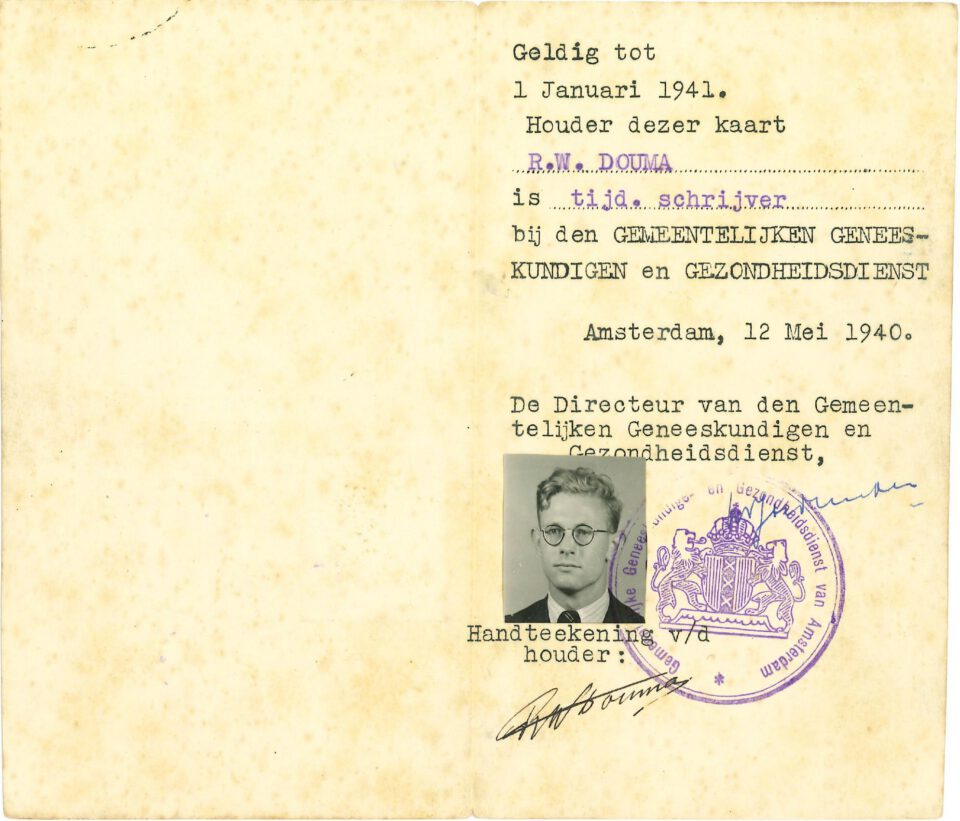
Zwanenburg was part of the group of young people in their early twenties centered around 25-year-old Arie Addicks, who, starting in 1940, had taken on the task of mimeographing and distributing the predecessor to *Het Parool* —*De Nieuwsbrief van Pieter ’t Hoen*—and later *Het Parool* itself. Zwanenburg distributed the newspaper in Amsterdam-East. His peer, 24-year-old Robert Douma—an office clerk at the GG&GD in Amsterdam who was also a member of the Addicks group—did the same in Amsterdam-West.
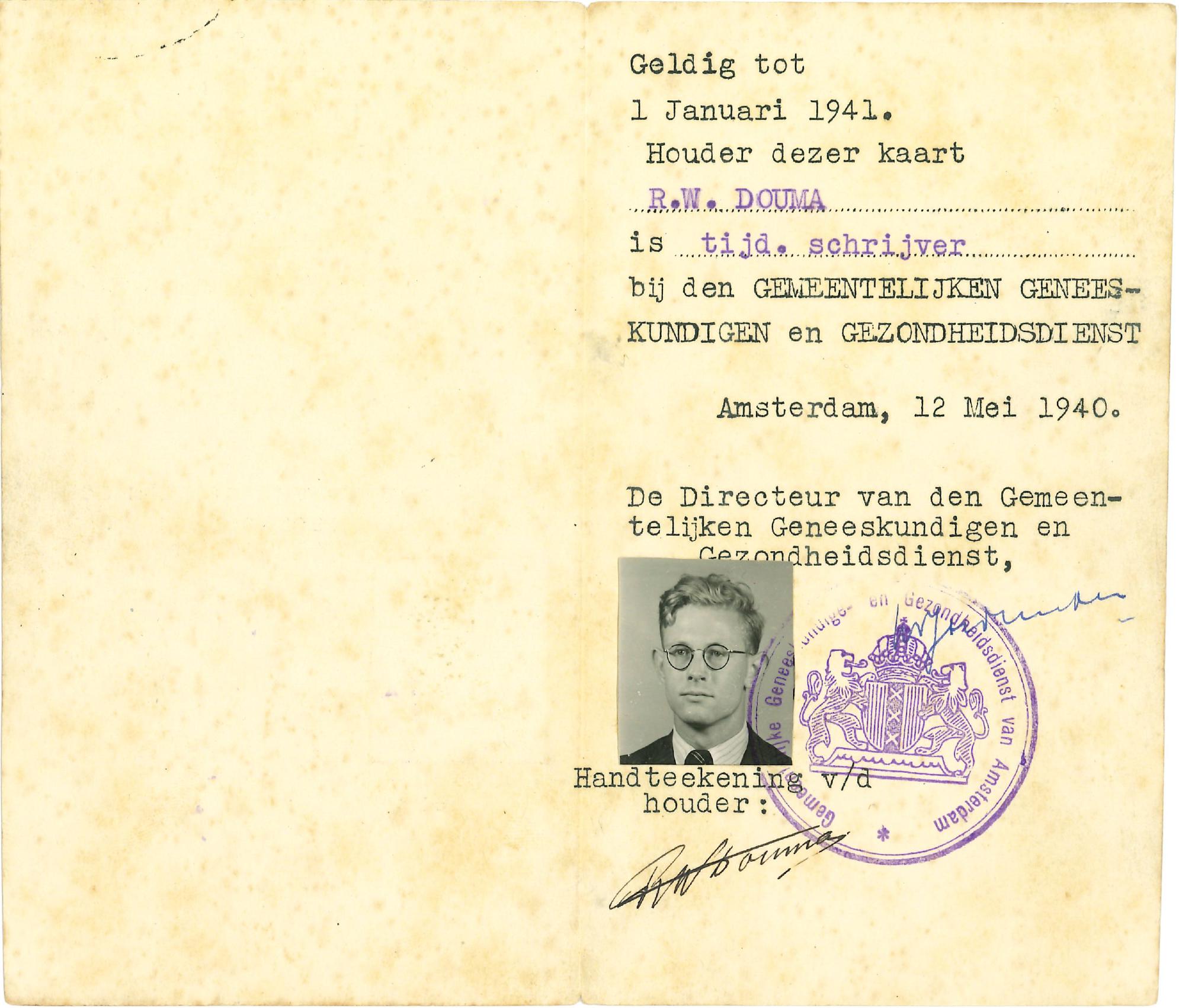
In the fall of 1941, virtually the entire Amsterdam distribution group led by Addicks was arrested. Zwanenburg, Douma, and numerous other members of the group had been betrayed by an acquaintance of Addicks.
Zwanenburg and Douma were socialists through and through and members of the AJC (Arbeiders Jeugd Centrale). Soon after the outbreak of the war, they decided to take action against the Germans. Starting in 1940, Zwanenburg was involved with the underground newspaper *De Vrije Nederlander*, which a group of AJC members produced and which contained articles, resistance poems, and a verse from the *Wilhelmus*. In 1941, he took part in the February Strike and lay down on the tram tracks to prevent his colleagues from driving out of the depot. Douma, who served as a sports leader at the AJC, took part in the riots against NSB members and was in contact with the Legion of Former Frontline Soldiers (LOF)—composed of Dutch military personnel—with the goal of establishing a secret army.
The First Parool Trial
After their arrest, Douma and Zwanenburg were sent to the Oranjehotel, the prison in Scheveningen. In July 1942, while awaiting trial, they were sent to Camp Amersfoort and subsequently transferred to the Kriegswehrmachtsgefängnis in Utrecht in mid-December 1942. In addition to the Addicks group, the newspaper’s printers and Frans Goedhart—the founder of *Het Parool* and author of *Pieter ’t Hoen’s Newsletter*—were also arrested. Frans Goedhart had been arrested in January 1942 while attempting to cross over to England.
“Just a few more hours, and it will all be over”
A total of 23 employees of Het Parool appeared before the court. This so-called first Parool trial took place behind closed doors in mid-December 1942. The defendants were assigned a German lawyer rather than a Dutch one. Thirteen of them, including Douma and Zwanenburg, were ultimately sentenced to death.
By then, on October 8, 1941, Addicks had been executed by firing squad in the Scheveningen dunes. In the meantime, others had taken over the distribution in Amsterdam.
“God, my boy, is this really the end?”
On December 21, 1942, the condemned prisoners were allowed to receive one last brief visit from their families. Douma received a visit from his father: “And then I had to tell him what my sentence was. Father just sat there staring at me blankly. ‘God, my boy, is this really the end?’ he sighed. A wave of emotion welled up inside me. I started talking, quickly, to distract myself from those thoughts. I don’t remember everything I said. Seven minutes is such a short time,’ he later wrote.
Douma wrote a sonnet about the verdict, titled *The Seventeen*: “To death… we had not thought / that the verdict would be so harsh, / Yet even though no one had expected this, / We stand there proudly, and no one cowers.”
The prisoners sentenced to death, who had in the meantime been taken to Camp Vught, left by bus on Friday morning, February 5, 1943, for the prison in Utrecht, where they were told what awaited them.
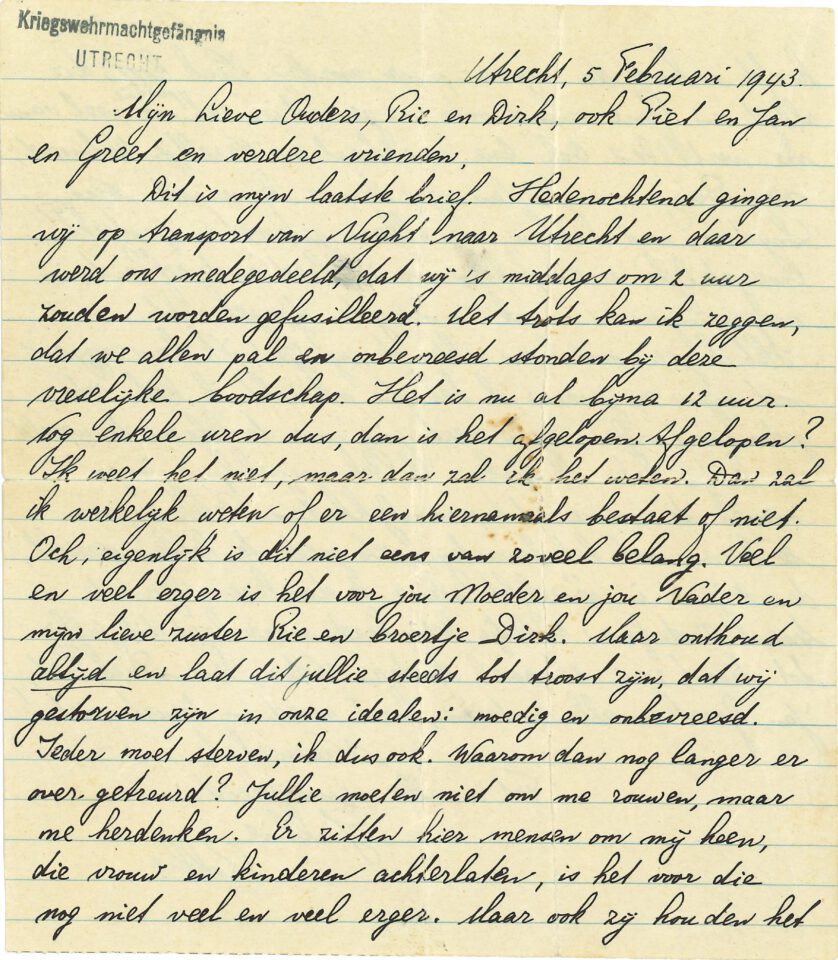
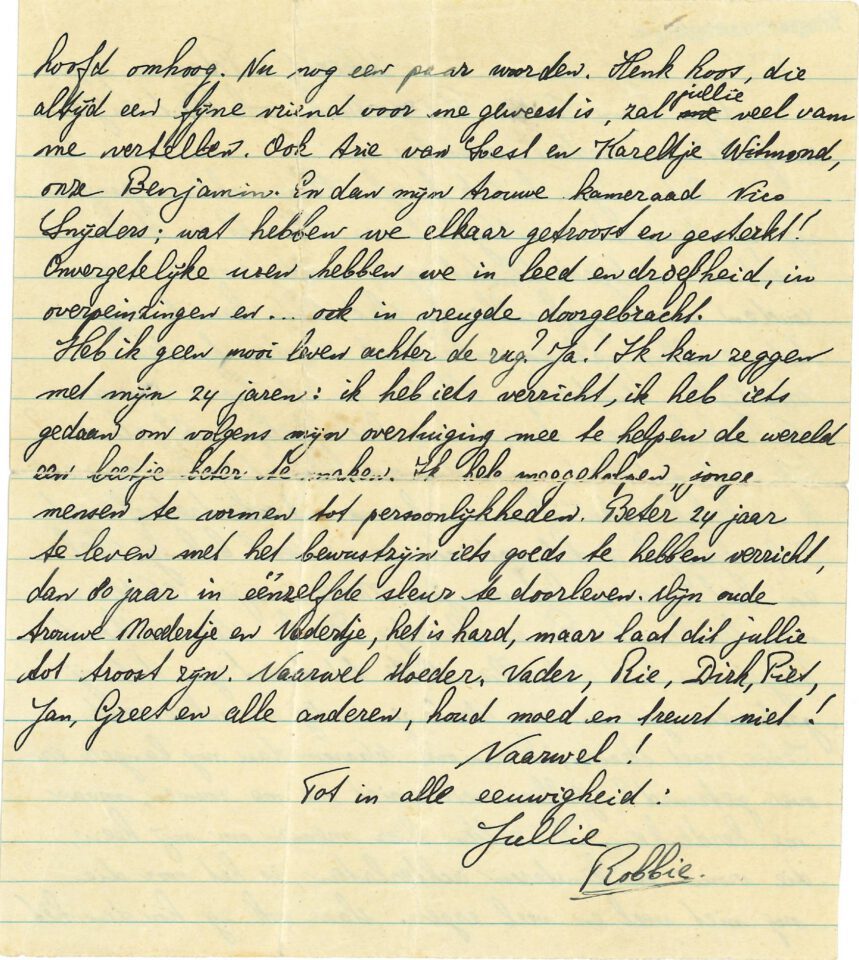
In his farewell letter, Douma mentions this death sentence: “I can proudly say that we all stood firm and fearless in the face of this terrible news. (…) Just a few more hours, then it will be over. Over? (…) Then I will truly know whether there is an afterlife or not. Oh, actually, this isn’t even that important. It is much, much worse for you, Mother, and you, Father, and my dear sister Rie and little brother Dirk. But always remember—and let this be a constant comfort to you—that we died true to our ideals: brave and fearless. (…) You must not mourn me, but remember me.’
“It’s better to live 24 years knowing you’ve done something good than to spend 80 years stuck in the same rut.”
He goes on to describe how his comrades comforted and encouraged one another upon hearing that news. “Haven’t I lived a good life? Yes! At 24 years old, I can say: I’ve accomplished something; I’ve done something to help make the world a little better, in accordance with my convictions. (…) Better to live 24 years knowing I’ve done something good than to spend 80 years stuck in the same rut. My dear, faithful Mom and Dad, it’s hard, but let this be a comfort to you. (…) Farewell! Until eternity: Your Robbie.’
“Our dear son” banned from obituary
The men were executed by firing squad at Leusderheide and buried in a mass grave. The day after the execution, the family was notified that their son’s farewell letter would be sent to them. The obituary was not allowed to include a date, nor could it mention “sudden death” or “our dear son.” Only “son” was permitted.
Robert Douma’s family paid no heed to that. Robert Douma’s preserved obituary card reads: “It is with deep sorrow that we hereby announce the passing of our beloved Son, Brother, Brother-in-Law, Grandson, and Nephew.” The bodies of the *Parool* staff members were found in October 1945 in a single mass grave. The thirteen men were reburied on December 19, 1945, in plot 1 of the Bloemendaal Cemetery of Honor in Overveen.
Every February 5, we commemorate the thirteen men from the Addicks group who were executed, as well as all the staff members of the underground newspaper *Het Parool* who were executed or murdered during World War II, or who were sent to concentration camps or prisons. They risked their lives for a free future.
The death penalty also hung over the head of *Het Parool* founder Frans Goedhart. However, he managed to escape from a police station in Vught in August 1943. A “good” police officer had left a door open. Goedhart then continued writing for the underground *Het Parool*. A copy of Douma’s handwritten farewell letter was published alongside his photo in *Het Parool* more than twenty years later, on December 18, 1963. “A Man Who Persevered” is the headline above the letter.
This article draws on sources including the books *Het Parool 1940–1945* by Madelon de Keizer and *De Eerebegraafplaats te Bloemendaal* by Peter H. Heere and Arnold Th. Vernooij, as well as the archives of *Het Parool*. The original farewell letters from Zwanenburg and Douma are held by the Democracy and Media Foundation.
The farewell letters that Jan Zwanenburg and Robert Douma wrote to their families
More about who we are and what we do


