Join the conversation! Have you noticed online that more content is being generated by AI? And how do you tell what’s real and what isn’t?
Today, the second topic of “The Great Media Debate” is featured on NUjij, NU.nl‘s interactive platform. Are you concerned about the growth of AI, or do you think its impact isn’t as significant as people make it out to be?
More and more social media posts are written by AI. Also, more and more images you see online are artificially created or edited. AI can make a lot of information accessible. For example, because you can easily ask chatbots how something works. Or because you can get information and news online very quickly—things you used to have to search for more extensively. But it’s not always clear what’s been created by AI and what hasn’t. Not all platforms have established rules for this yet.
Figures from the annual Digital News Report released earlier this year also showed that 13 percent of Dutch young people use AI chatbots as a news source and that this usage is increasing slightly. At the same time, the same report indicates that various studies have raised concerns about the reliability and diversity of information provided by AI chatbots.
Algorithms
Last week, we kicked things off with the first topic: “How does your algorithm affect you? Does it influence you, and what do you think about that?” It generated more than 200 engaged responses. One reader wrote:
“I’ve noticed that algorithms seem to be getting better and better at figuring out what interests me. That’s sometimes convenient, but at the same time it’s a bit unsettling: you mainly see content that matches what you’ve viewed before, which makes it easy to end up in a kind of digital bubble. [..] Then it influences not only what you watch, but ultimately also how you view the world.”
Another reader notes:
“I don’t use social media like Facebook, Instagram, etc., so in that sense, it doesn’t bother me at all. What does bother me, though, is the streaming service I use—and, for example, my Google search results. I get results that are very different from those of, say, a friend or neighbor. Personally, I find this a huge loss. It naturally creates a bubble that’s hard to break out of—even though I like to keep myself well-informed on a wide range of topics.’
About The Great Media Debate
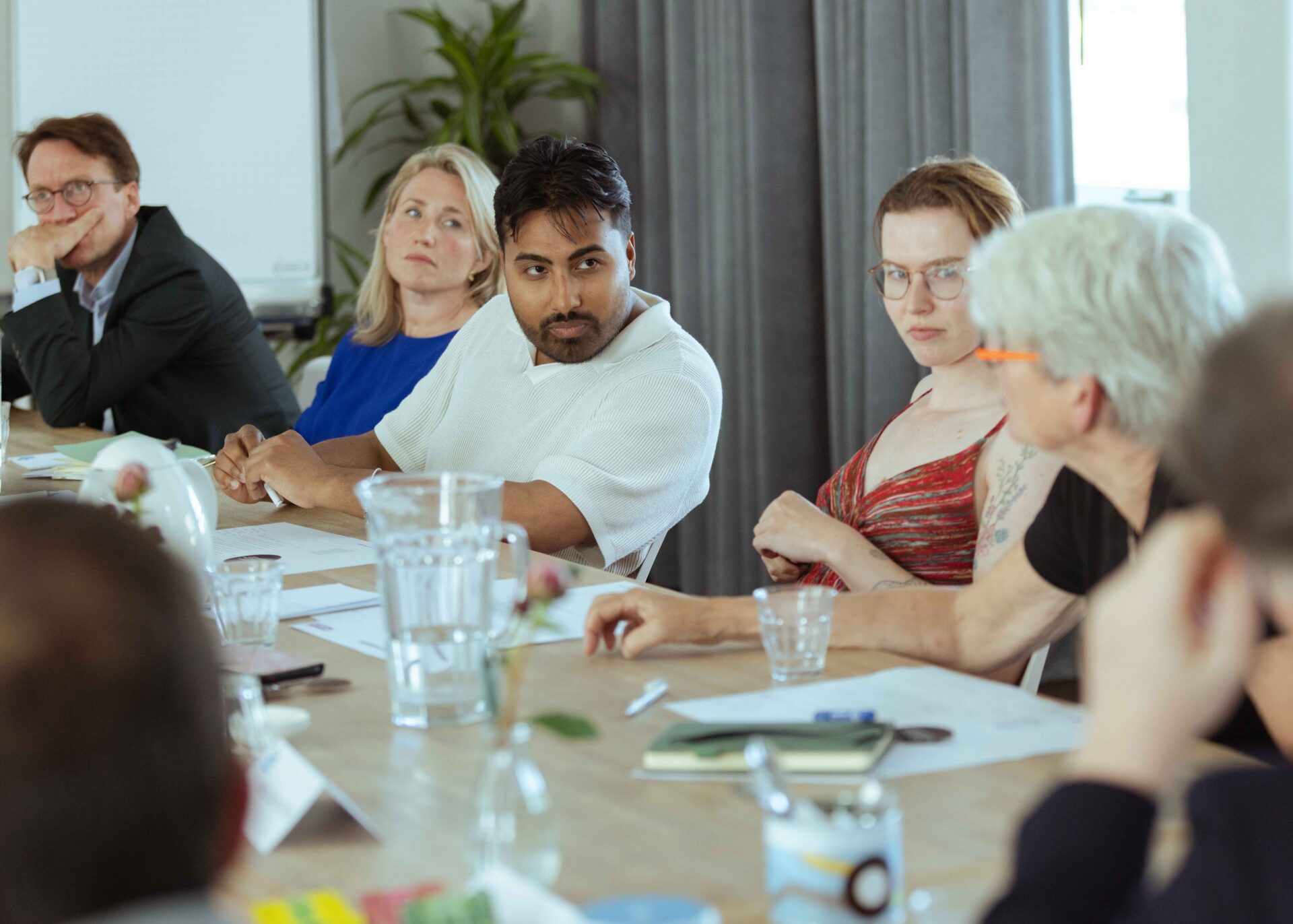
The Great Media Debate is a study, a conversation, and a campaign all in one. It’s about how we experience the news in the Netherlands, what we’re missing, what concerns us, and what could be improved. We believe these aren’t questions for media experts alone. That’s why we’re engaging in a conversation with a broad audience.Over the next six weeks, a new proposition or theme will be posted online each week. The Great Media Debate is an initiative of the Democracy and Media Foundation in collaboration with De Argumentenfabriek and NU.nl.
Want to stay informed? Sign up for our newsletter and join the NuJIJ panel on NU.nl. We’ll share updates on this page and on LinkedIn. We write about insights from our meetings, share interviews with experts, explain how we reached certain conclusions, announce the Media Meetups, and would love to hear your insights as well.