Lotfi El Hamidi: ‘The goal of becoming a diverse editorial office is by definition uncomfortable’
As a journalist, you must continue to critically question yourself and the world, says journalist and writer Lotfi El Hamidi. He left NRC and is back at De Groene Amsterdammer. “You shouldn’t sacrifice your principles just because they don’t align with the election results.”
Text: Or Goldenberg
When Lotfi El Hamidi saw that people with a bicultural background were specifically encouraged to apply for the Martin van Amerongen fellowship, he shared the job posting on social media. Two editors from *De Groene Amsterdammer* sent him a message: why didn’t he try for it himself? He thought: now that you mention it, why not? “I was almost thirty; it felt like now or never.”
The fellowship offers young journalistic talent with a bicultural background the opportunity to learn the trade by working for a year on the editorial staff of *De Groene Amsterdammer*. This program is supported by the Democracy and Media Foundation with the goal of increasing diversity in the Dutch media.
According to El Hamidi, about ten years ago, newsrooms realized they needed to address their lack of diversity in order to remain credible to their audience. “Sometimes you think you’re given a job like that because of your background. But so what? In the end, I still had to prove myself and deliver stories. I didn’t underestimate how important a byline is.”
Even as a student, he already had a subscription to *De Groene*. “Later on, I kept seeing the name Hassan Bahara at the top of articles, and I felt a sense of pride. It *is* possible. So with a name like that, you can also write such major articles in a leading weekly magazine. Sooner or later, boys and girls come across a newspaper, and then they might think: you can become a journalist even with a name like that. It’s not something that “other people” do.”
The fellowship turned out to be a stepping stone. After working full-time at NRC for five years—including as opinion editor—El Hamidi is back at De Groene Amsterdammer. His departure did not go unnoticed: his farewell piece caused quite a stir, but more on that later.
After completing a traineeship like this, people with a bicultural background don’t necessarily get a job.
“This isn’t just the case in journalism, but also, for example, in the police force or other organizations. Recruitment is working—new faces are coming in, but at the same time, old faces are leaving. It’s striking that this isn’t a sustainable investment. Everyone is competing for the same spot, but journalism organizations need to show more courage—to set aside some extra funding to give a position to someone with a different perspective or different skills than others.”
Did you bring a different perspective as a fellow?
“Absolutely. Everyone contributes something during a meeting, but I’ve noticed that names I grew up with are unknown here. Like the Syrian poet Nizar Qabbani. The neighborhood in Rotterdam where I’m from also brings a different worldview to the newsroom. Others don’t share my experiences and insights. That different perspective also comes from the string of educational programs I’ve taken. I didn’t finish a lot of them and spent a long time drifting through vocational school, where I was truly miserable. Studying was a liberation for me. I learned to think and to develop myself. Whole new worlds opened up. In a sense, writing was that, too.’
A liberation?
“I grew up in the 2000s with everything that was happening back then, and I couldn’t make head or tail of it. I had more emotions than wisdom. Then I’d hear something about integration or Islam and want to say something back, but I didn’t have the words to do so. Still, I was very consciously taking it all in—not just because I knew this was about me and ‘us,’ but also because I was a total news junkie. I read everything, watched everything, followed everything—and I didn’t forget a thing.”
When I started at De Groene, it felt like it was meant to be. I suddenly found the words to put down on paper; it was almost magical. Ever since I started in journalism, it feels like it’s my turn. There were so many things swirling around in my head, but I didn’t have a platform to speak or write. Now I’m here—we’re here—and we’re bringing forward a perspective that was previously missing, as if there are still some loose ends to tie up. After that, we can move forward again.
It sounds really sentimental, but I have to pinch myself that I’m sitting here—whether it’s at NRC or De Groene. It’s not something to take for granted. I came very close to not going to college. If I hadn’t, I’d be a manager at a supermarket right now. Nothing wrong with that, but it’s not what I aspire to. In an alternate reality, my father in Morocco would have become what I am now: a historian, a writer. That wasn’t possible back then. It’s the tragedy of life that things don’t turn out the way you dream they will. It all hangs together by a series of coincidences.’
Implicitly—but also explicitly—you state in your farewell essay for NRC , you’re quite critical. Why?
“It’s terrible to say, but there isn’t really any intellectual journalistic discourse taking place. The conversations remain superficial. Everyone is full of emotions and sentiments. They need an outlet, and then we can get back to work. As if that weren’t part of the job. That disappoints me. A newspaper isn’t an uncritical conduit. It has principles, stands for something, and has a distinct voice. And that’s been missing over the past fifteen months—during the war in Gaza, but also when it came to the political landscape in the Netherlands, in Europe, and in the West. Why aren’t we talking about that? I’m not saying the newspaper has to do something that aligns with my personal preferences or vision, but are we reflecting enough? Are we self-critical? Or are we just barreling ahead like a train? The daily news cycle is very demanding. There are no breaks to really discuss these issues.
Call it the Fortuyn trauma, if you will, but there’s still talk of catering sufficiently to right-wing readers. Are there enough right-wing voices in the newspaper? Then people look at the columnists and wonder if they aren’t all interchangeable left-wing progressives or liberals. Surely there must be a right-wing voice mixed in there. But why is that necessary? Is the right lacking something? Aren’t they in power? Don’t they have their own channels where they’re loud enough? There’s also a belief in a target audience that doesn’t exist: a moderate right-winger who stands for the rule of law and democracy. Classical liberal-right. But that’s not the right-wing voice they’re looking for; it has to be anti-woke, climate-skeptical, and fuel for a false polarization.
The newspaper claims to be averse to groupthink and to take a very liberal, individual-centered approach. But that very stance betrays that groupthink. Voices are categorized: this is “woke,” this is D66, this is to the right of the VVD, this is anti-“woke,” this is reactionary. And all those voices have a right to exist. So I wonder: is it the newspaper’s job to give all those voices in society a platform? I was invited to a joint interview on polarization, with the central question being how people with divergent social visions can find common ground. But do I even want to find common ground with people who say they want “fewer of my kind”? You can disagree about urban planning, about more or less space for cars. But about more or fewer Moroccans? That’s not a debate. The newspaper loses sight of this—the things you can genuinely disagree about or exchange perspectives on. I’m not comfortable with everything being reduced to an all-or-nothing debate. That’s exactly what gives populists what they want.
The goal of becoming a diverse editorial team is, by definition, uncomfortable. And that’s okay—that’s exactly the point. That’s the kind of polarization we actually need—as long as there’s a conversation. Look, the editorial staff is terrified of activists: of bringing in people who shout “climate crisis” or “racism.” In other words, they’re afraid of being labeled “woke.” Because of that, I felt a little less at home there than when I started in 2017. A newspaper, of all things, needs to be confident and stay true to its principles. It’s not a rigid identity, but it is a guiding principle. You shouldn’t sacrifice your principles just because they don’t align with the election results. The newspaper’s mission is to uplift, educate, and empower. But I see a very insecure newspaper that’s afraid to rock the boat or offend people. That makes me uncomfortable.”
De Groene is indeed a bubble. How desirable is it for journalistic media to primarily cater to their own ideological base?
“Since when has ‘ideology’ become a dirty word? *De Groene* is for anyone interested in the world. If that’s a bubble, then I’m happy to be in it. And I don’t believe that *De Groene* ‘caters’ to a particular base. No one ever says that the Dutch person who reads *De Telegraaf* and watches SBS is living in a bubble, but intellectuals are constantly being made to feel inferior. Anti-intellectualism is rampant. So it’s nice to have a bastion like *De Groene*.’
Are you relieved to be back at De Groene again?
“Pretty good. If studying was a form of liberation, then this is another one. It’s like a warm bath, an intimate living room. There’s more space and time to reflect than there was at the newspaper. I need to rediscover myself again.”
Photo: Merlijn Doomernik
Other fellows from the Martin van Amerongen Fellowship
Yaghoub Sharhani
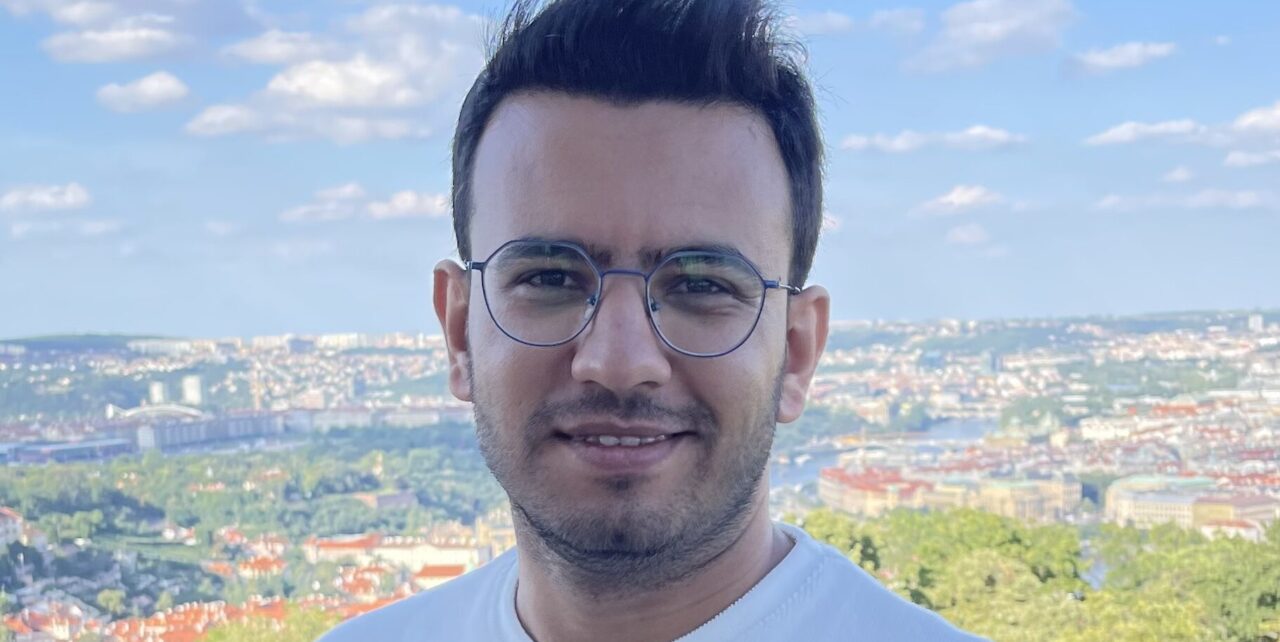
Yaghoub Sharhani—works three days at De Groene and two days at NTR; began the Fellowship in 2022
“Before the fellowship, I wrote mainly in Arabic and Persian, where journalistic writing is very factual. At that time, I hadn’t yet mastered the Dutch writing style and approach to storytelling. I’m really learning that at De Groene. The great—and luxurious—thing about the fellowship is that you aren’t assigned to a specific editorial team, but can vary the types of stories you write. Sometimes you write domestic stories, sometimes foreign stories, sometimes an investigative piece or an essay. I’ve tried everything, and I still do. I’m learning a lot from it, and it’s also a lot of fun. You’re expected right away to write pieces and meet deadlines, but as a fellow, you start with lower expectations than a regular editor. In the first few months, I was really able to take the time to get to know the newsroom.”
Zoran Bogdanovic
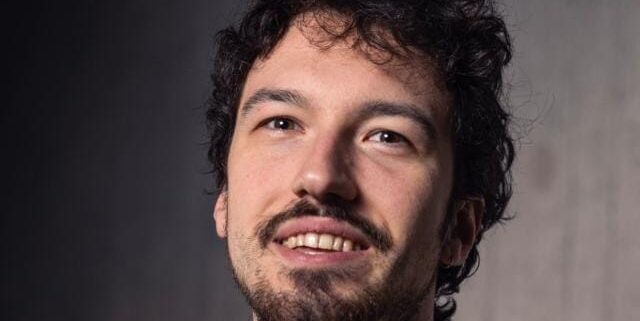
Zoran Bogdanovic – a 2019 fellow, now works at Trouw
“I loved *De Groene* and I also wanted to write about the big picture and why people do what they do. I started with an internship. Back then, I’d start my mornings with my hands in diapers at a waste processing plant to make ends meet, and I’d work in the newsroom in the afternoons.”
My male relatives served in the Bosnian Serb army. That army committed genocide. In my family and in my hometown, this is kept quiet, as if it never happened. It was my big debut for the magazine.
After my internship, I worked at other places to gain more experience before I was hired as a fellow. That was my first serious step into journalism. I’ve learned a lot from my colleagues—everyone is incredibly talented and experienced. It’s a place that welcomes multiple perspectives and offers depth. Having De Groene on your resume makes it easier to land freelance assignments afterward.”
Munganyende
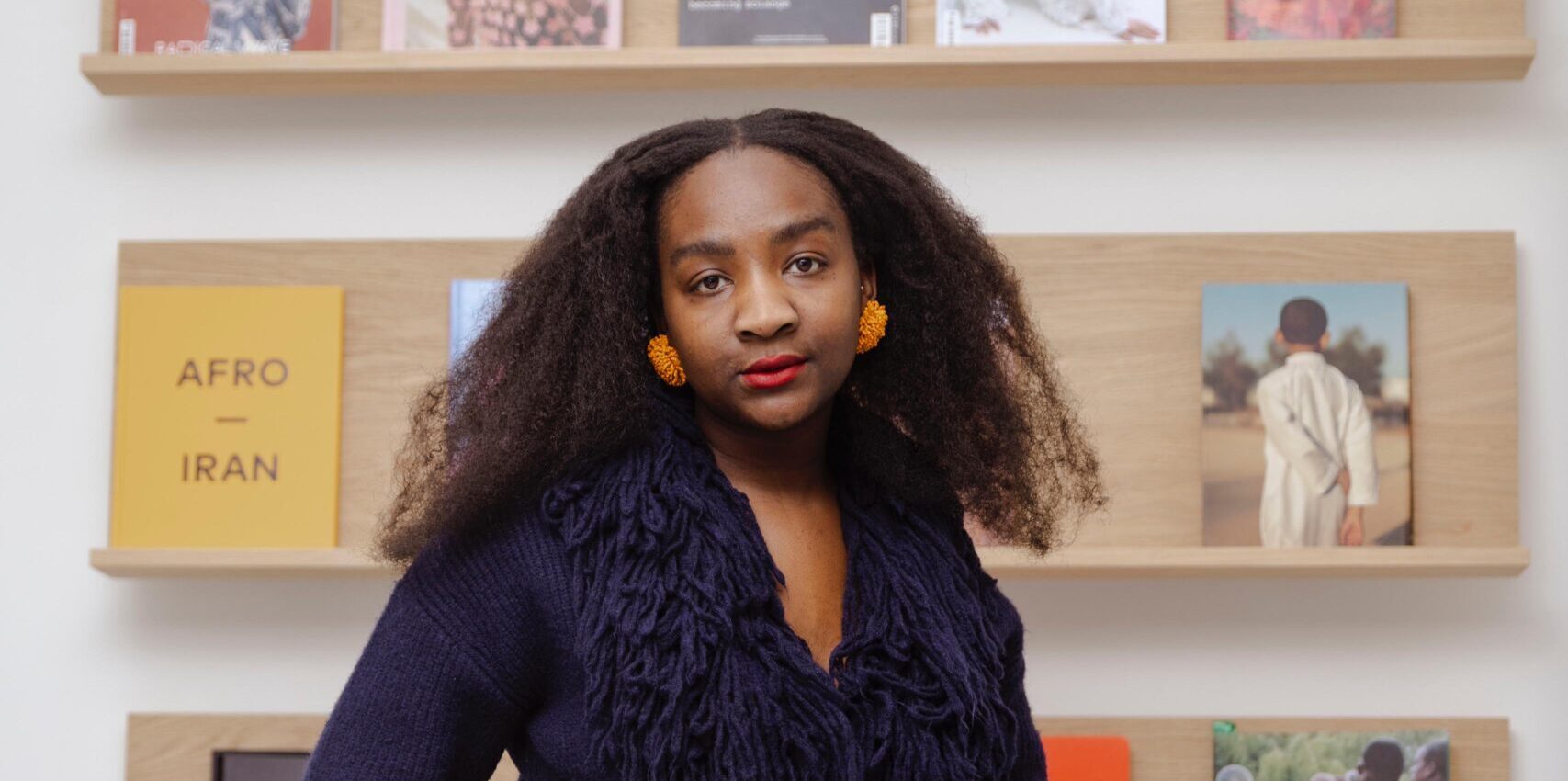
Munganyende – Fellow from 2023 to 2025
“As a freelancer, I was used to creating stories on my own. Because of that, I understood how stories could be shaped, but not how urgency could be shaped. In a newsroom, you decide that together, through discussion. That’s also when you see how your colleagues do it, and you learn from them.”
Essay writing is my foundation as a writer, so I approached my fellowship primarily from the perspective of arts journalism, which allowed me to appreciate just how important the work of an arts editorial team is. These are the stories that take time to unfold and that offer a different perspective—one that goes beyond what meets the eye. They are the stories behind the news—stories that comfort and slow us down. That perspective influences the imagination of other departments; it forces the editorial staff to see things differently. As an arts editor, you think from different frames of reference. For example, we had a special issue on America, and I immediately thought of a visual artist. That’s where the enrichment lies.”
Editor-in-Chief of De Groene Amsterdammer Xandra Schutte, Editor-in-Chief ofDe Groene Amsterdammer, on the fellowship:
“The importance of the fellowship lies, above all, in the fact that it gives us the opportunity to provide exceptional individuals with access to journalism. They come from diverse backgrounds: someone who has earned a Ph.D. or has a long career as a civil servant, people with an immigrant background, or literary writers. This brings a different perspective, and that’s very valuable—for the editorial team as well. De Groene is a small editorial team with little turnover, but thanks to the fellowship, we’re constantly bringing in new people who offer different perspectives. This goes far beyond just the articles that are written: it also sparks many new ideas and conversations. This helps keep the editorial team from becoming stagnant.’
More about who we are and what we do