Journalism reflection sessions: ‘How much of the frontline news in our flooded zone is truly valuable?’
We are on the cusp of a new information age. What that means for the news media remains to be seen. This year, SDM organized three discussion sessions with journalists on this topic.
“We’ve lost our way. In that respect, the aging population is good news: it gives the newspapers some time to think about the new generations.”
“Are people under 35 really less informed?”
“It is the reader who now determines legitimacy, not the medium.”
“Truth has become ‘could be.’”
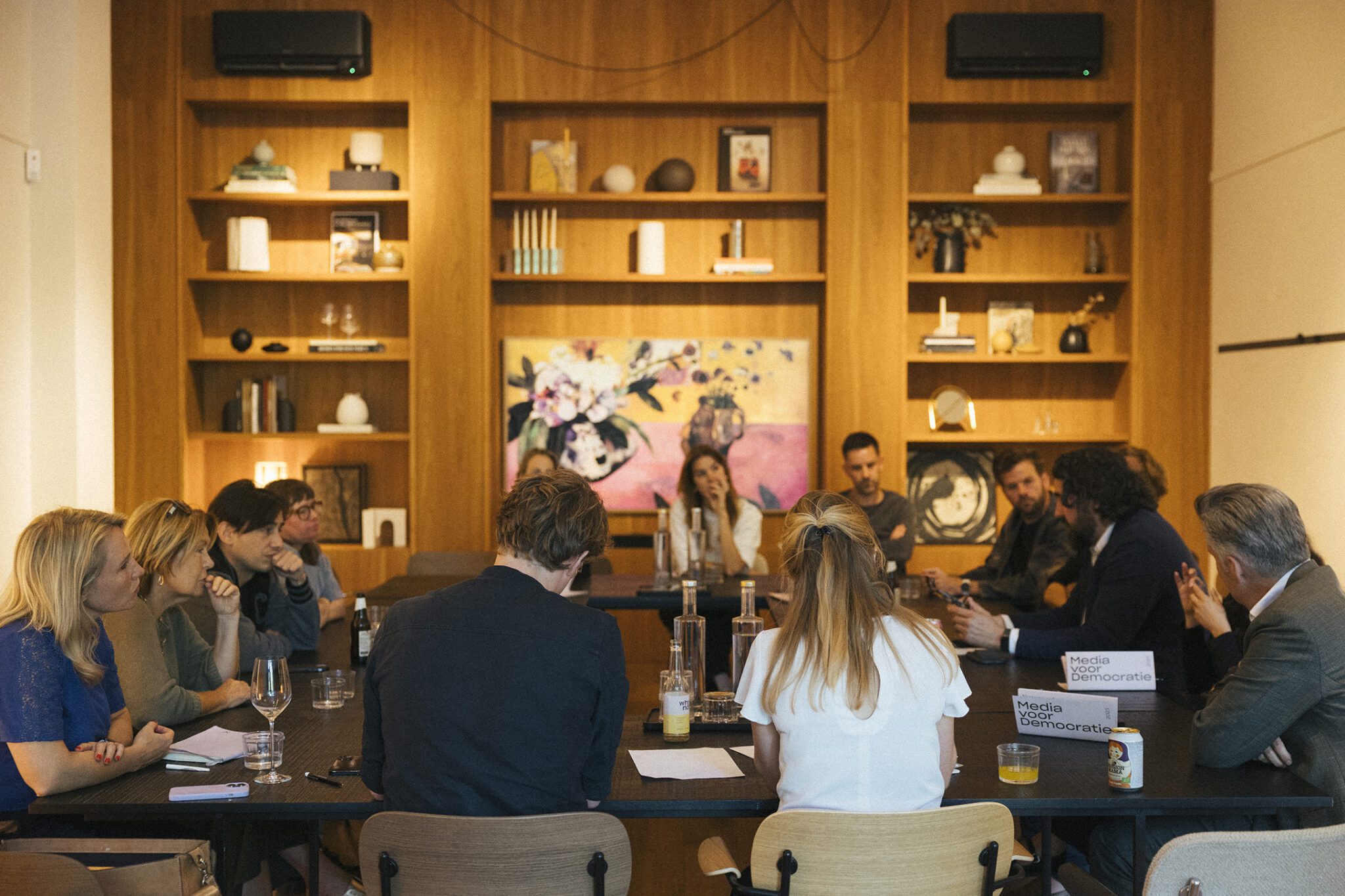
These were statements that continued to echo in our minds for days. They came up during the three journalistic reflection sessions organized by the Democracy and Media Foundation. At these meetings, journalists and media professionals engaged in conversation with one another in a confidential setting, with the goal of exchanging ideas and developing new perspectives. We wrapped up the series this summer.
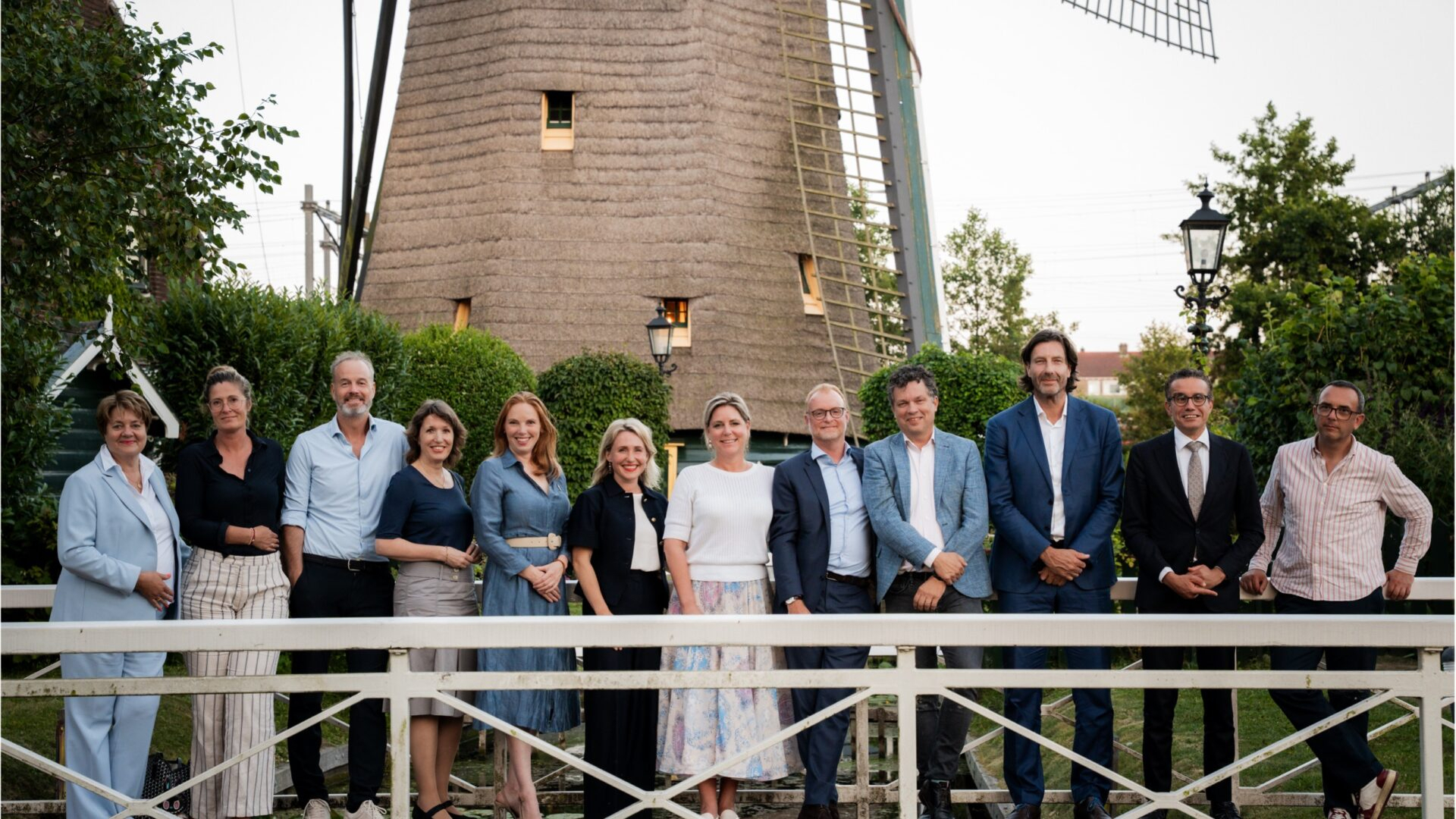
In total, about thirty participants (whose composition varied each time) met three times. They included tech editors, a TikTok reporter, freelance investigative journalists, and editors-in-chief from 12 different media outlets. Based on their affiliations (including NRC, Zembla, EW, Trouw, RTL Nieuws, and Al Jazeera) or fields of expertise (journalism studies, artificial intelligence), participants brought different approaches to the same challenges. Some of them returned frequently to delve deeper, while others enriched a single session with their fresh perspective.
Why reflection sessions?
“How unique,” said one participant after a reflection session, “to be able to bounce ideas off a group like this—made up of people from different editorial teams—about your dilemmas. I always feel such a need for this, but in your day-to-day work, you mostly just have to make decisions.” This frequently shared experience was the reason we began holding reflection sessions a few years ago, in collaboration with Van de Bunt Adviseurs.
SDM believes in the value of taking a step back, exchanging ideas, and developing new perspectives, and believes that this can make the media landscape stronger and more future-proof. As an independent organization, it brings together journalists from diverse backgrounds and provides a space for reflection.
Eight Insights
This year’s series focused on the (new) role of journalism within the information ecosystem. We “consume” news differently, construct the truth differently, and discuss it differently. How should journalists respond to this? From these three reflection sessions, we have distilled eight insights.
1. “We need to double down on factual accuracy”
For a long time, journalism served as a gatekeeper: the media determined what information the public was allowed to see. In the digital age, that role shifted to that of a “gatewatcher”: a guide through the abundance of news. Now, it seems there is no “gate” at all anymore. The media landscape is more like a vast, fenceless festival grounds à la Woodstock, where everyone roams freely and chooses which stages to visit, and where big tech companies are the main sponsors and curate the main stage.
As a journalistic outlet, how do you stay relevant in such a complex landscape? How do you ensure you stand out amid the chaos of stimuli and platforms? Where does journalism’s unique value still lie? “We’ve long thought we had to compete with Netflix,” says one participant, “because of that platform’s enormous reach and relevance. But our real competitors are the chatbots that pass themselves off as factual sources. After all, we’re competing in the pursuit of truth. And that’s why we need to ‘double down on factual accuracy.’”
2. What Is Journalism Today (1) – An Institution with Authority?
The authority of journalism is waning and will continue to erode, the participants predict, partly due to technological developments, but also, to some extent, because of our own actions. What journalists consider important is not always what constitutes valuable information for the public. “Why don’t you ever write about…?” ask people who don’t see themselves reflected in a newspaper’s coverage. Journalists tend to take a “in and out” approach —an extractive method where they just grab a few quotes. How does this benefit a school, mosque, or community center? What’s in it for them? Are new approaches needed to maintain authority and relevance?
“Why do you only write about us when something bad happens, and never about our daily lives?” an editor-in-chief was asked. “Back in the day, it was actually a good thing if the news wasn’t about you,” one participant remarked in response. Because news all too often meant bad news—“that which deviates.” But in the flooded zone, that position is untenable, and the news paints a distorted picture of reality. It raises questions: How do you determine what is news? And who are you to decide that?
Still, journalism retains its authority, one participant noted: “You can’t not follow the news.” Many people don’t subscribe to a newspaper, but they are certainly socially engaged. Everyone wants to be able to join in the conversation around the coffee machine. Authority seems to be concentrated more often around individuals; think of court reporters like Saskia Belleman. Is a journalistic medium still an authoritative institution, or rather a platform for authoritative journalists and public figures?
3. What Is Journalism Today (2) – A Service and a Trusted Friend?
Is an influencer who practices the right to reply a journalist? What about a “media creator” who works for a journalism company? And can a television broadcast schedule, a rap song about a social issue, or an article on how to get slugs out of your garden also contain “journalistic content”?
Service journalism has become a way to strengthen the bond with the public and cement the role of “friend of the community,” but it also faces resistance in newsrooms—“Do I really have to write an article about snail control?” Media companies need to stay afloat financially, but it remains to be seen whether this will help them regain credibility. At the same time, one participant notes, the NOS website, the 8 p.m. news, and Rob Trip are quintessential “friends of the family,” just like newspaper columnists: people you trust, who are part of your daily life, whom you can ask for advice on all sorts of matters, but who also hold up a mirror to you and sometimes point out the other side of a story.
4. It’s not the right answers that matter, but the right questions
“We’re going to explain how it works now” is the standard approach of many journalists. Journalists are always focused on getting the right answer, while it’s really about the question, according to one participant. For example, politicians are regularly asked, “How did the meeting go? It took a long time, didn’t it?” instead of “What did you discuss?” Programs need to have the courage not to feature a politician on camera during their segment if that politician isn’t actually adding anything substantial to the content. After all, what does this tangled web of politicians and journalists convey to the viewer? “It looks like a set-up. If you work hard on good questions, people will be willing to talk. And if someone doesn’t want to talk, you show that.”
5. Media are being played off against each other with legal threats
The journalistic field has become grimmer. SLAPPs (strategic lawsuits to obstruct publications and silence critical voices) are on the rise, a trend that has spread from the United States. Wealthy companies and individuals, in particular, armed with expensive lawyers and PR consultants, employ this tactic to silence journalism they deem unfavorable.
The consequences are often not legal, but practically paralyzing. Even if a lawsuit is won, it costs media organizations a fortune and drains their energy—energy that can’t be devoted to journalism. Freelancers are left financially and mentally exhausted as a result.
A new trend is that media outlets that republish someone else’s story are also being targeted with legal action. For small news websites, even a cease-and-desist letter (sometimes automatically generated) is reason enough to take an article offline. These legal actions make media outlets more hesitant to rely on fellow media outlets. As a result, they are more likely to give in to this threat, even when the publication was well-researched.
Greater cooperation and solidarity within the journalism community are essential to this end. Share evidence, support one another, and jointly resist legal intimidation as well as public smear campaigns. For example, by refusing to give a platform to people who do not allow for a rebuttal in the newspaper but who, in the evening on a talk show, seek to discredit the media outlet.
6. Engaging with the public: Is that part of a journalist’s job?
What is it like to end up at the police station as an editor-in-chief with three binders full of threats from a single reader? Interaction with the public serves as a barometer for newsrooms, but it also carries risks: fear, intimidation, and sometimes even trauma.
What does this mean for the role of journalists? Is the journalist also a moderator in the public debate? At some media outlets, interaction has now become a regular part of the job, thanks in part to technological advancements. But journalists are often not trained for this. Whereas a student teacher learns about de-escalation and interacting with students, many journalists pick up these skills “on the fly.” In this regard, journalists can learn from other guiding professions. And on social media—which is built on broadcasting and polarization rather than dialogue—that conversation is especially difficult to have. It sometimes seems like an impossible task.
Technology also seems to have made journalism more anonymous: “Journalists used to be in the city; now they live on the outskirts.”
7. Journalism as we know it today will die out.
Perhaps our journalistic landscape needs to fall apart a bit first before it gets better, as was predicted in the final session. Journalism as we know it today will no longer exist in thirty years. That is not a call for apathy or cynicism. It’s actually troubling that so few journalists seem genuinely concerned about this. The need for news media to reinvent themselves is enormous. We won’t make it by just carrying on as usual. Let’s be honest, as one participant notes, how much of the front-line news in our “flooded zone” is truly valuable?
The assumption is that people will always be looking for high-quality, reliable information. It’s up to us to do everything in our power to help the younger generation launch the initiatives of the future that will meet this need. And we must continue to strive to protect a rich, diverse media landscape: lead by example. If we do nothing, chatbots will, at the very least, become the primary source of news.
8. Is journalism still necessary?
“Back in the day, there was just one computer in our newsroom,” says one participant. At the time, people thought, “We don’t need that—journalism is so strong.” Now the tables have almost turned: big tech companies are the curators of our media, and more and more young people seem to no longer need journalism at all. According to the Digital News Report 2025, interest in and consumption of news are declining, particularly among 18- to 35-year-olds.
The question is: how serious is this lack of interest? In a healthy, well-functioning democracy, does everyone have to watch the news? Are people under 35 really less informed? Do they understand the world less well? Should we take them by the hand, or will things work out on their own? What would actually happen if journalists went on strike for four days?
Perhaps even more concerning than these changes in news consumption and demand is the fact that, for a growing group of people, the line between fact and fiction seems to be blurring. How can we still tell what is true and what is not?
This fall, the Democracy and Media Foundation is organizing reflection sessions on the democratic rule of law. In addition, the second edition of the Three-Day Journalism Workshop will take place in early 2026, where participants will spend three days delving into an issue related to the future of journalism.
More about who we are and what we do