Media for Democracy: ‘The head is out of the sand’
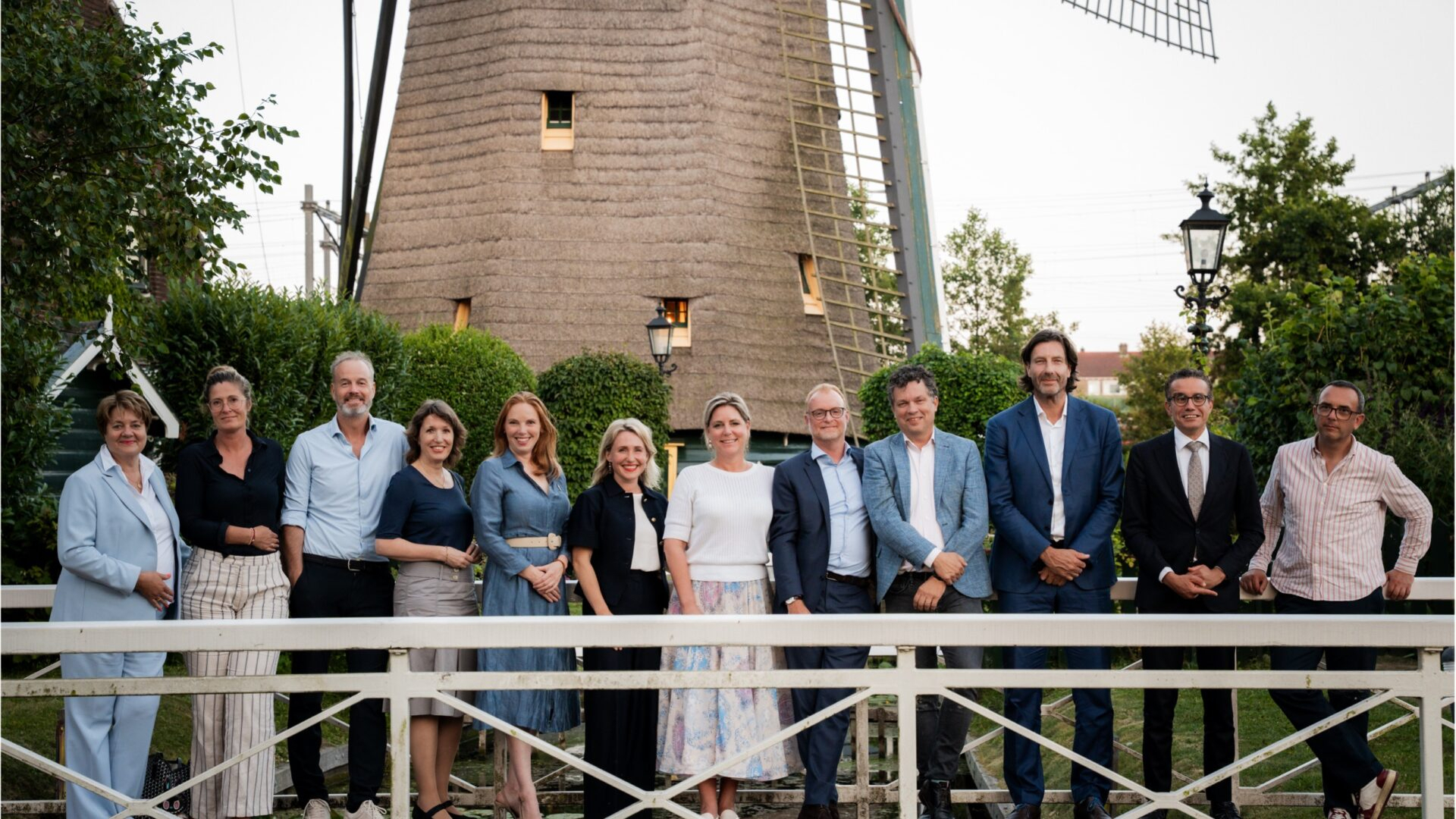
On the longest day of the year, one hundred influential figures from the Dutch media gathered at the “Media for Democracy” event, organized by SDM. This was a unique occasion, as never before in recent history had such a group come together. “We’ve finally taken our heads out of the sand,” one participant remarked. “We see the shortcomings within the sector, and the need for self-reflection.”
Editors-in-chief from virtually all Dutch news outlets, the CEOs and COOs of DPG Media and RTL Nederland, board members of NPO and Mediahuis, officials from the Ministry of Education, Culture, and Science, media researchers and professors, foundation directors, and critical columnists—they were all there.
The shared sense of urgency was palpable: How can—and must—journalistic media better fulfill their democratic role now that the world is undergoing profound changes?
Why Media for Democracy?
Old answers and views are no longer sufficient to respond to these developments. Together with the Foundation for the Promotion of the Christian Press, the Lux et Libertas Foundation, the Het Nieuwe Parool Foundation, and the De Volkskrant Foundation, the Democracy and Media Foundation (SDM) facilitated the discussion.
Because our statutory mandate is to contribute to the formation of public opinion in support of the rule of law and a pluralistic media landscape, and we serve no other interest than that. But also because we deeply believe that we can only make progress if we dare to discuss, collectively and openly, where the problems lie.
Five Insights
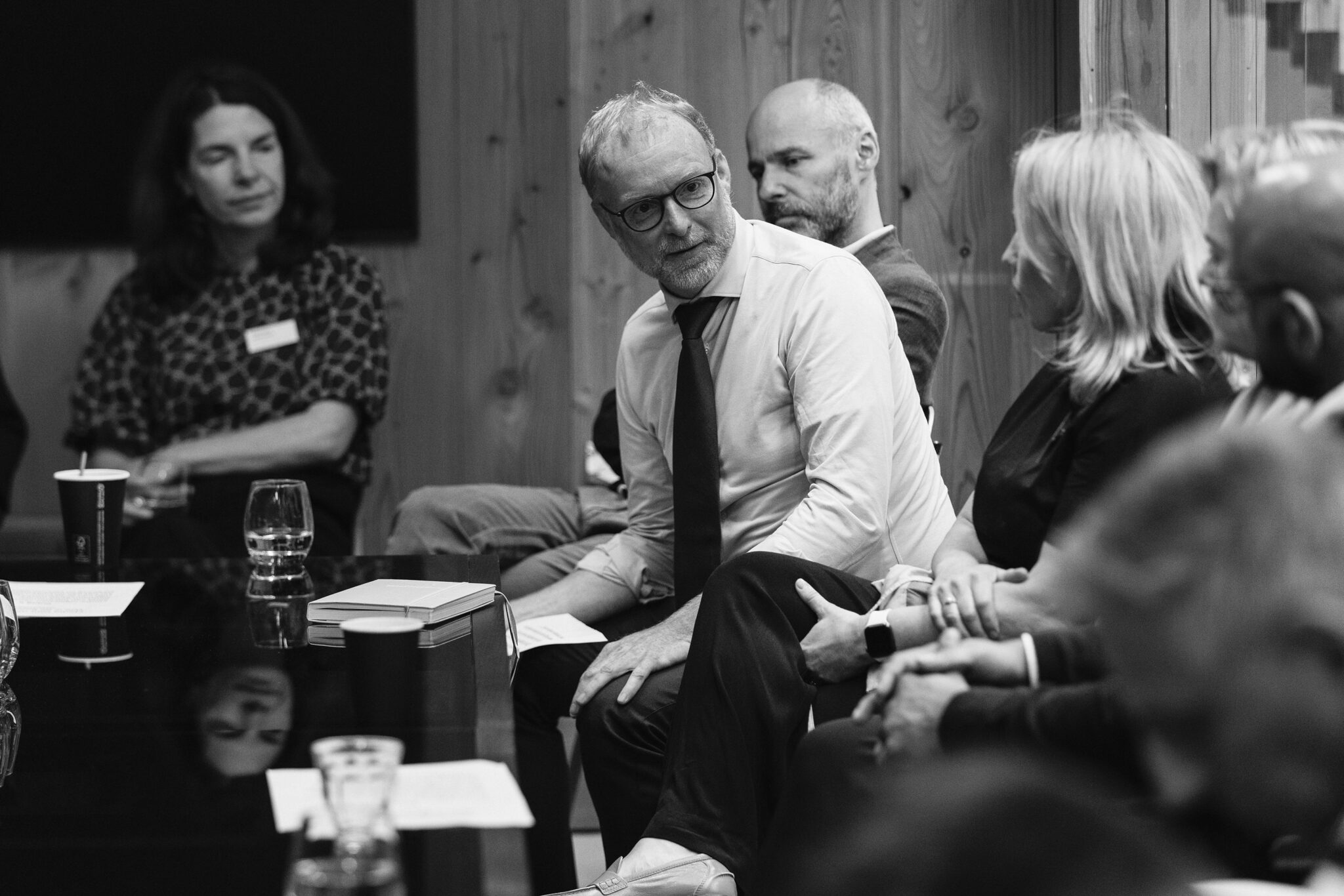
That is why the participants in “Media for Democracy” explored new perspectives and insights in breakout sessions. Without falling into the journalistic trap of immediately proposing solutions, we discussed where we stand, what the challenges are, and what we need to safeguard. Five themes stood out.
1. The public must take center stage
Journalism needs to become more “audience-oriented” and better understand and empathize with who its audience is and what it needs. As one participant suggested: “Maybe we need couples therapy.” Not just with “the public,” but with all kinds of groups within that public (especially young people). They’re looking for recognition and validation, transparency, and genuine connection. “And that requires an open and people-centered approach to journalism, one in which care, emotion, and love also have a place.” It’s encouraging that journalists can draw on a rich tradition of “old-school” skills to stay in touch with sources and networks.
2. Greater emphasis on the value of journalism
Journalists need to reframe their success: shifting from a one-sided focus on volume and price (and always “more”) to a model that better highlights the value of their profession (more along the lines of “less, but better”). For example, by recognizing the contribution of journalistic media to community building. There also appears to be more room and a greater need for mission-driven journalism—especially when that mission is to safeguard freedom of speech.
3. We mustcontinue to takea criticallook at our own performance
“We’ve finally come out of our shell,” one participant remarked. “We see the shortcomings within the sector, and the need for self-reflection.” During the sessions, participants adopted a critical stance, engaged in self-examination, and focused on finding solutions. They indicated that a less arrogant attitude is needed, with more room for transparency and accountability. Without, however, compromising the sector’s professionalism and credibility. And that’s a fine line to walk, given the many forms of subversion. Inclusive newsrooms are needed to bring about cultural change in the sector, which often remains a challenge.
4. Greater cooperation is needed, within clearstrictclearer frameworks
Several participants noted that, as journalists and media professionals, we need each other to continue fulfilling our crucial role in Dutch society. Together, we form a rich ecosystem comprising both commercial and public media, with players both large and small. At the same time, we compete with one another for visitors, subscribers, and advertisers. And the pressure in this area will only increase with the announced VAT hikes and budget cuts. That is why participants called for, on the one hand, a clearer division of responsibilities between the public and private sectors and, on the other hand, a greater emphasis on a sense of unity within the media sector. “Too much emphasis on our differences, making a mountain out of a molehill, and publicly calling each other out undermine our collective position.”
5. The thecalls for industry-wide contingency plans
Journalists don’t like to be constrained by laws and regulations. At the same time, there are doomsday scenarios that send shivers down the spine of the entire industry. “The owners are still based in Belgium, but what if that changes to China…?” and; “Artificial Intelligence doesn’t have editorial independence.” Having contingency plans and establishing accountability therefore seem exceptionally urgent and necessary. Investments are needed to continue guaranteeing free journalism, for example through legal assistance and resilience training. At the same time, action must be taken against silos and barriers to access. For example, there was discussion of algorithm-free access and funding to break through paywalls.
Aftermovie by Media for Democracy. Video: sixteen:nine
Dilemmas
The need for this discussion was evident not only from the enthusiastic turnout of the participants, but also from the contributions of three critical thinkers.
Roel Maalderink took to the streets and interviewed members of the public. Although he emphasized that the people in the video are not representative, several themes from recent scientific studies came up. For example, we heard that trust is no longer guaranteed (“All the newspapers are controlled by a few people, and they decide what can be said”) and that avoiding the news is becoming increasingly common (“It makes me depressed”). It’s concerning how difficult most interviewees found it to define what journalism actually is (“BothCestmocro and Het Financieele Dagblad, but maybe that’s inconsistent…?”). In addition, some interviewees expect others to consume content “outside their bubble,” but they themselves never actually do so. In the follow-up discussion, Roel emphasizes that journalists need to take a stronger stand against current politics and not go along with the flow too much.
Simon Kuper, a journalist and columnist for the Financial Times, drew on his international experience to show how easy it is to dismantle a democracy when citizens no longer (can) follow the news. When politicians systematically question the credibility of journalists, a narrative of unreliability emerges, which can lead to self-censorship and economic undermining. He also used the BBC as an example to show how vulnerable a public broadcaster can be when politicians interfere with appointments. At the same time, he is also critical of the triviality of much of the Dutch news and fears that this, too, has a corrosive effect. He praises the existence of public broadcasters in Europe, which provide space for a shared reality—in contrast to the U.S. Watch the full recording of Kuper’s presentation here.
“Simon Kuper: The PVV and Public Broadcasting—What to Expect?” Image: zestien:negen
Legal philosopher Maxim Februari described how current societal changes resemble the shifting of tectonic plates. Sometimes visible on the surface, but especially beneath the surface, immense pressure is being exerted on the rule of law. And while this is happening, the media seem primarily preoccupied with trivial matters. They are unable to pinpoint the real issues and, as a result, risk losing their relevance and influence. He urges journalists to take their audience seriously by focusing on the real problems of our time. Read his argument here.
Continued
We look back on a day of open discussions, free of recriminations. It was a day marked by depth and insight into the dilemmas we face. There was mutual understanding and acknowledgment of the shared responsibility we bear. And ultimately, it also provided greater insight into the issues for which we must formulate answers.
The answers are not yet concrete, and the solutions cannot be implemented immediately. In fact, we are only at the beginning of a major self-examination of the (renewed) role and mission of journalism. However, there is a widespread sense of urgency regarding this self-examination. As SDM, we look forward to continuing this conversation in the coming year, including through our reflection meetings and perhaps also a second edition of “Media for Democracy” in 2025.
Thank you
Media for Democracy would not have been possible without the efforts of Maike Olij, Martha Riemsma, Nienke Meijer, Ila Kasem, Farid Tabarki, Inge Brakman, Yvonne Zonderop, and Niels Büller.
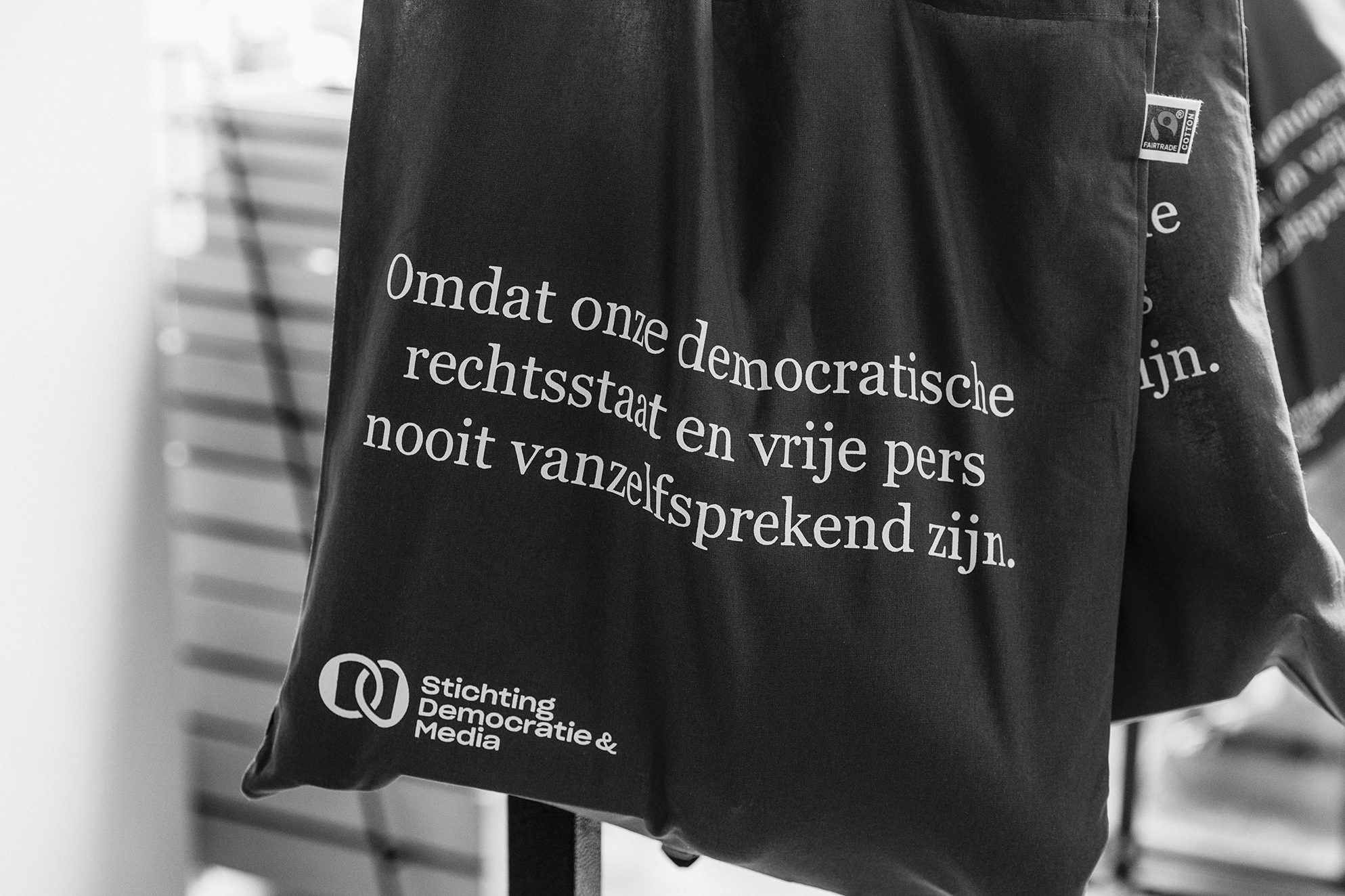
“What an amazing day Friday was! Stimulating, entertaining, and with a really ‘chill vibe’ (as my sons would say). I truly enjoyed it immensely, had some great conversations, and it got me thinking again about journalism, the media, and our role in society and democracy.” – Arne van der Wal, co-editor-in-chief and co-founder of Follow the Money
“Just a quick thank-you note for last Friday. It was a great gathering: lots of substantive discussions, good conversations about topics that need to be addressed, and, above all, a festival of ideas. I felt a lot richer afterward.” – Freek Staps, editor-in-chief of ANP
“It was a very inspiring day and once again demonstrates how important the role of independent journalism is. And for us as a public broadcaster, that’s all the more true! Thank you for organizing this event and bringing us all together. It’s essential.” – Frederieke Leeflang, Chair of the NPO Board of Directors
More about who we are and what we do