Journalistic leadership research: ‘Times have changed. There is a need for smart thinkers without egos’
What is good leadership? And why is it so important to the role of journalism in a democracy? Karlijn Goossen conducted research on this topic on behalf of the Democracy and Media Foundation.
Text: Lisa Peters
For a long time, leaders—both within and outside journalism—were men, which is perhaps why we’ve come to associate leadership with a certain style. But: “No one wants another Bokito at the top anymore,” Ilse Openneer, the editor-in-chief of RTL Nieuws, told Villamedia.
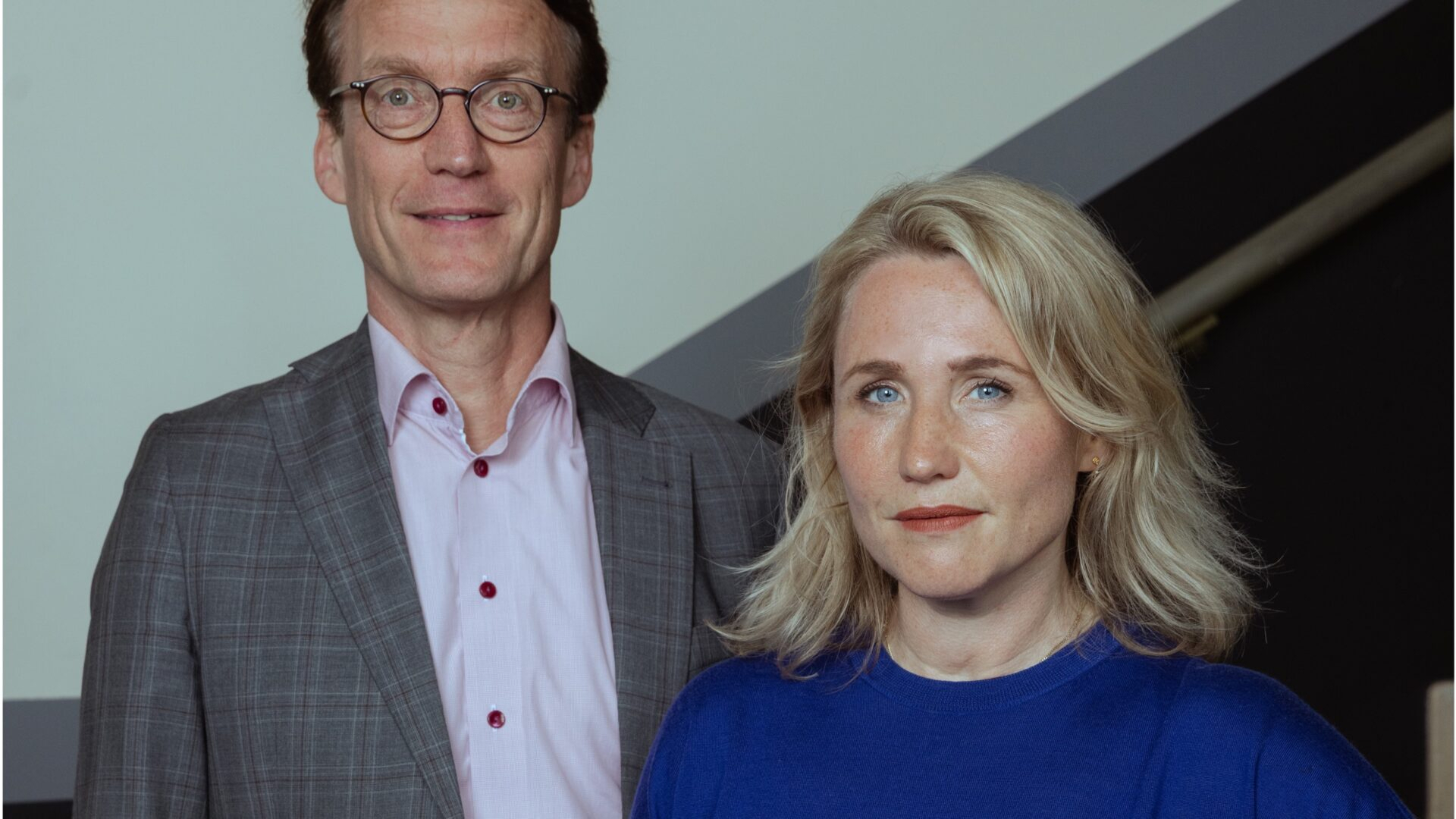
In fact, it turns out we need exactly the opposite. “Times have changed. We need smart thinkers without egos,” says Karlijn Goossen over her oat milk cappuccino at a reading table surrounded by issues of *Quotes*, *Vogue*, and *Quest* at a café in Utrecht Central Station. “Journalistic leaders must, above all, be of service to their colleagues.”
Goossen has just returned from a train trip to Leipzig with her wife—Beitske de Jong, a host at NPO Klassiek. “We first delved into Bach and then into the GDR and the Third Reich. I realized once again how fragile our democracy is and how little we’re aware of it. Not long ago, we were still living in a world of mass surveillance, propaganda, and lies. Now we hand over all our data without a fight and hardly give any thought to the consequences.”
In 2023, Goossen conducted research for the Democracy and Media Foundation on why improving leadership in journalism is so important. The idea for this research was sparked by conversations Goossen had with Karel Smouter (now co-editor-in-chief of Trouw), Klaske Tameling (formerly of NPO Radio 1), Freek Staps (ANP), and Anniek van den Brand (DPG). “We all agreed that many developments in journalism seem to be stalled due to poor leadership, with harmful consequences for journalists, their managers, and ultimately—because it also affects quality—the public.”
So what’s different now compared to, say, twenty years ago? “Journalism is taking a beating due to poor leadership, but it’s no longer being swept under the rug. People are speaking out and daring to speak their minds.”
This is reflected in the Van Rijn Commission’s report on misconduct at the NPO. In *Saw Nothing, Heard Nothing, Did Nothing*, more than 1,484 employees reported having experienced inappropriate behavior in the previous year, either as victims or as witnesses. Experiences ranged from systematic sabotage and physical and verbal abuse to sexual harassment.
Goossen conducted more than seventy interviews with researchers, journalism leaders, and strategic advisors. The insights she gained are, at times, shocking. “My disappointment stems from poor leadership, political games within media companies, ill-considered strategic decisions, and journalistic values that were thrown overboard,” one of them concluded. And she heard similar experiences from “about ten to fifteen” others. Here are three ways in which poor leadership is so damaging to journalism.
- Unbelievable journalism that applies double standards
It’s a common belief that a good journalist will also make a good editor or editor-in-chief. For years, you write top-notch stories as a journalist, until you rise to the position of editor-in-chief and suddenly find yourself with a whole new set of responsibilities on your plate. Goossen: “Journalists slip into that role, but they aren’t prepared for it.”
“Pretty bizarre,” she says. She taught for thirteen years in the journalism program at the Christian University of Applied Sciences in Ede. “We don’t just tell a journalism student, ‘Go make a podcast—here’s the deadline, good luck!’ No, we explain how podcasts work, what kinds there are, and what they need to pay attention to during recording. And we give them space to practice and learn. That’s how we should view leadership, too.”
“If journalism wants to be taken seriously by the outside world, journalistic leadership must take itself much more seriously.” Because: with great power comes great responsibility. Scandals in journalism have an impact on its credibility and its image as an independent force in a democratic constitutional state. “You can’t hold others to account in numerous #MeToo articles and then turn out to be no better yourself. Then you’re seen as biased and applying a double standard.”

- Without a clear vision
Newsrooms are running at breakneck speed, the workload is enormous, but there’s often a lack of vision. There’s hardly any time to pause and reflect on why things are done a certain way. “You see that at public broadcasters, there’s little discussion about journalism, its value, and the pressure we’re under. That has consequences for the quality of journalism and how we deal with digital innovations.”
Mid-level managers in journalism are caught between the pressures of the newsroom and a top management that demands all sorts of things. “These people usually have a keen sense of what they should be doing from a journalistic standpoint, but all too often that isn’t in line with the organization’s strategy. That strategy is focused on ratings, shareholders, or algorithms. And so, journalistic values get pushed to the sidelines.” According to Goossen, the unintended consequence is that the people you actually want in these positions become disillusioned, while the more status-driven colleagues stick around.
A case in point is the interview SDM conducted with former editor-in-chief Sjirk Kuijper and editor-in-chief Sophie van Oostvoorn. “When I started as a manager, I promised myself I wouldn’t do it for more than eight years; that seemed like a healthy approach to me,” he says. “I had a cynical view of male managers, who at some point came to see themselves as irreplaceable and became too accustomed to their position, the status, and the income.” His cynical view is accurate, according to Goossen. Kuijper has since stepped down as editor-in-chief and is once again writing as a staff writer for the newspaper.
Since this summer, Goossen has been the Journalism Genre Coordinator at the NPO. For the past two years, Goossen had already held a leadership position. She was deputy editor-in-chief at the EO, where she saw how far the organization had strayed from its journalistic mission. “When I started, the proposal was to change my colleagues’ job titles to ‘content creator.’ I refused. We had serious journalists on our team—we’re not going to call them ‘content creators,’ are we? That would mean you haven’t understood what ‘journalism’ is all about.”
Another thing: people who consume journalism are not “consumers,” according to Goossen. “These are citizens. You can certainly ask yourself what their needs are and how to reach them, but your core mission is journalism. The most important thing is: what do people need to know?”
Goossen observes that poor leadership also causes a group of journalists from non-Western backgrounds to drop out. “They don’t want to work in an environment with so little vision and so little room for them.” This lack of representation has democratic consequences: which groups can you still reach as a media outlet, and whose issues are you failing to address because they’re being overlooked?
- Deaf to Social Change
That’s the crux of the problem, according to Goossen. Blind to the changing society and focused solely on survival within its own organization, journalism is becoming irrelevant. “Then you don’t see that right-hook coming. That’s happening as we speak.” We haven’t looked far enough ahead to understand what social media and big tech mean for the relevance of journalism. We need strong journalistic leadership to be able to make sound judgments between journalistic values and social reality.”
It doesn’t help that the journalism landscape is increasingly controlled by media giants like the NPO, DPG Media, and Mediahuis. They operate like cargo ships that are slow to change course. “That’s the well-known problem with legacy media; they’re cumbersome organizations that find it very difficult to pivot or adjust course. In an unstable world, that’s exactly what you need.”
Journalism leaders must therefore also be people who can handle a lot of pressure and a lot of uncertainty. “The journalism landscape is changing so rapidly that, as a media outlet, you can’t plan more than five years ahead. And even then, you’ll have to adjust your strategy along the way. The tech sector is much better at adapting to the constantly changing environment.”
There is no ready-made solution, but Goossen hopes to succeed in launching an institute for journalistic leadership. “In other countries, these issues were identified much earlier, and there are official programs for journalistic leadership. We don’t need just one course or workshop; we need to cultivate a new leadership culture, including peer review groups. A brand-new editor-in-chief or project manager needs something very different from a (deputy) editor-in-chief or content curator. All of those learning pathways need to be carefully designed and developed.”
“Traditionally, when we think of a leader, we picture a kind of general marching at the head of the troops—someone like Rupert Murdoch or Christian van Thillo,” according to Goossen. But, as her research shows, a good journalistic leader is someone who is constantly focused on the people they lead. “It’s someone who constantly navigates between themselves, the organization, and the public. Someone who is highly socially sensitive, incredibly communicative, and above all, someone with little ego who dares to make decisions.”
According to Goossen, firing anyone who doesn’t fit that profile is certainly not the solution. But because of that image of the general, we have few introverted leaders and few female leaders, although that is slowly changing. “It’s not malicious intent. We don’t need to eliminate all current leaders. There’s an enormous amount of pressure on journalism. If we leave all those armies leaderless, without their general, things won’t get any better.”
More about who we are and what we do