Journalistic reflection sessions: ‘In the daily grind, I missed the question: what are we actually doing?’
For many journalists, stepping back from the issues of the day is a major challenge. That is why the Democracy and Media Foundation organizes reflection sessions. The central question is: How can journalism be made future-proof? Two participants, editor-in-chief Sophie van Oostvoorn (C.Tru) and former editor-in-chief Sjirk Kuijper (Nederlands Dagblad), haven’t finished discussing the topic yet. “There should always be a clear and well-thought-out journalistic vision coming from the editorial board.”
Text: Aybala Carlak
You were recently promoted to a new position. How did you find—or how do you find—the role of manager?
Sjirk Kuijper: “When I started as a manager, I promised myself I wouldn’t do it for more than eight years; that seemed like a healthy approach to me. I had a cynical view of male managers, who at some point came to see themselves as irreplaceable and became too accustomed to their position, status, and income. Anyway, toward the end of my tenure, the COVID-19 crisis broke out, so it was an unfortunate time to step down. In the end, I did it for nine and a half years.
You make difficult decisions about staff and brand identity, and maintain relationships with external parties. The fact that the Nederlands Dagblad has been able to maintain its independence is due, for example, to establishing very good partnerships with other media outlets, such as de Volkskrant, from which we’re allowed to share articles. As a leader, you’re responsible seven days a week for everything the newspaper does and for what happens. I had to be on call at all times. That’s different now.’
Sophie van Oostvoorn: “Since we’re still in the startup phase, I’m not quite sure yet what kind of leader I’ll become. In any case, I’m talking to a lot of people who already have experience with this so I don’t have to completely reinvent the wheel. From my days playing softball, I’m used to taking on more of a captain’s role; now I’m really more of the boss. Our team is still pretty small, so it wouldn’t be appropriate to be too authoritarian.”
“I’m launching a new product and putting together a team, which is pretty exciting. And I know that we need an editor-in-chief who can guide the editors on day-to-day content. So someone like that will play a key role in shaping the brand’s identity—I realize that.”
Kuijper: “My priority when I started was to change the newspaper’s image. But how do you do that? I noticed that, partly because of the newspaper’s religious character, editors were hesitant to practice journalism freely. Ten years later, some still remember that I said in a speech that I’m not responsible for their mortgages. In other words: the newspaper’s survival was my priority—you have to adapt to the new culture. Together, as an editorial team, we determine what a media outlet conveys.
“I tried to set an example back then: ‘Look, this is the kind of response we should write; this is how we answer letters to the editor; this is what openness looks like.’ Don’t view the reader as someone who’s annoying or angry, but as someone who cares. Connect with them. That shift took about two to three years.”
Have you guys started to view journalistic leadership differently in the meantime?
Kuijper: “Yes. As a manager, you underestimate the impact of what you say. You can’t just philosophize off the cuff anymore, because what you say becomes a kind of fact. And now that I’m reporting again myself, I realize I’m not as completely autonomous as I thought—even though, as a journalist, you’re naturally often anti-authoritarian. Suddenly, I have to consult with others again about the topics I think are important or the analysis I want to conduct. But journalism is a team sport—that’s the added value of an editorial team: it’s supposed to be an intellectual community where you can spar with one another and also offer each other criticism.”
Van Oostvoorn: “As a manager, you really do need to be more aware of internal processes and how people interact with one another. And you have to fully realize that you can no longer just say whatever you want—certainly not just offer criticism—but must actively seek input and feedback. What I often see is that a good journalist is simply put in charge of an editorial department or section, and sometimes that works out well, but sometimes it doesn’t. I often find myself thinking: just send them to a management course. A good work culture isn’t something that just happens on its own—you have to work hard to create it.’
Kuijper: “I think that’s also where our lack of candor came from—a culture in which, as a manager, you sometimes didn’t get involved in the content at all, and then would speak up when you didn’t like what you saw. That’s why I wanted to ensure that the editor-in-chief’s position would be respected. That way, they can work together much more effectively and build mutual trust.”
Is there enough reflection taking place in newsrooms? What, exactly, warrants reflection?
Van Oostvoorn: “You get so caught up in the day-to-day routine that I sometimes missed taking a step back and asking ourselves: What are we actually doing here? What is the purpose of this article or this editorial perspective? People act as if what you do or how you work as an editorial team is all just a given. There should be a clear and well-thought-out journalistic vision coming from the editorial board. To give an example: a well-known dilemma for newspapers is the paywall. Do you want a hard paywall to attract more subscribers, or do you want a more flexible one for greater reach? So, as a newspaper, you really need to know what drives you.”
Kuijper: “I recognize this dilemma. At the time, I found it one of the most compelling issues. On the one hand, quality journalism simply costs money. Readers have to be willing to pay for it. On the other hand, you also want to get a message across; you have a democratic responsibility as well. And what’s the best payment method? How do you ensure that your stories remain affordable and accessible—especially for young people—while still covering costs? That’s quite a puzzle.”
Van Oostvoorn: “And young people consume the news in a completely different way. You have to remove a few extra barriers for them; for example, if you lure them from TikTok to a website and then ask them to log in, they’ll lose interest right away.”
You’re both actively working to reach your audience. What stands out about the way we consume news these days?
Van Oostvoorn: “Young people consume a lot of information—and all at once. Studies show that while they do consider journalism and the values behind it important, they don’t really know how to identify journalism as such. Reliable news brands are present on social media, but they’re not yet reaching young people very effectively. They’re still trying too hard to translate the newspaper format to Instagram, rather than thinking from the user’s or the platform’s perspective.”
At the same time, young people no longer view information in such black-and-white terms. They can certainly tell when something is exaggerated or incorrect, but it’s more about the experience. As a journalist, it’s therefore better to be transparent and involve them in your work process. And let go of the traditional journalistic style of writing. Just tell the story chronologically and in everyday language, just as you would in a bar.’
Sophie van Oostvoorn has been appointed editor-in-chief of C.Tru—a youth-oriented journalism brand set to launch this fall, also under the Mediahuis umbrella—from her role at the NRC Readers’ Desk. She is the author of the newsletter *De Nieuwe Lezer*, which focuses on journalism and a younger audience.
A few years ago, Sjirk Kuijper stepped down as editor-in-chief of the Nederlands Dagblad so he could return to writing for his newspaper.
About the Journalism Reflection Sessions
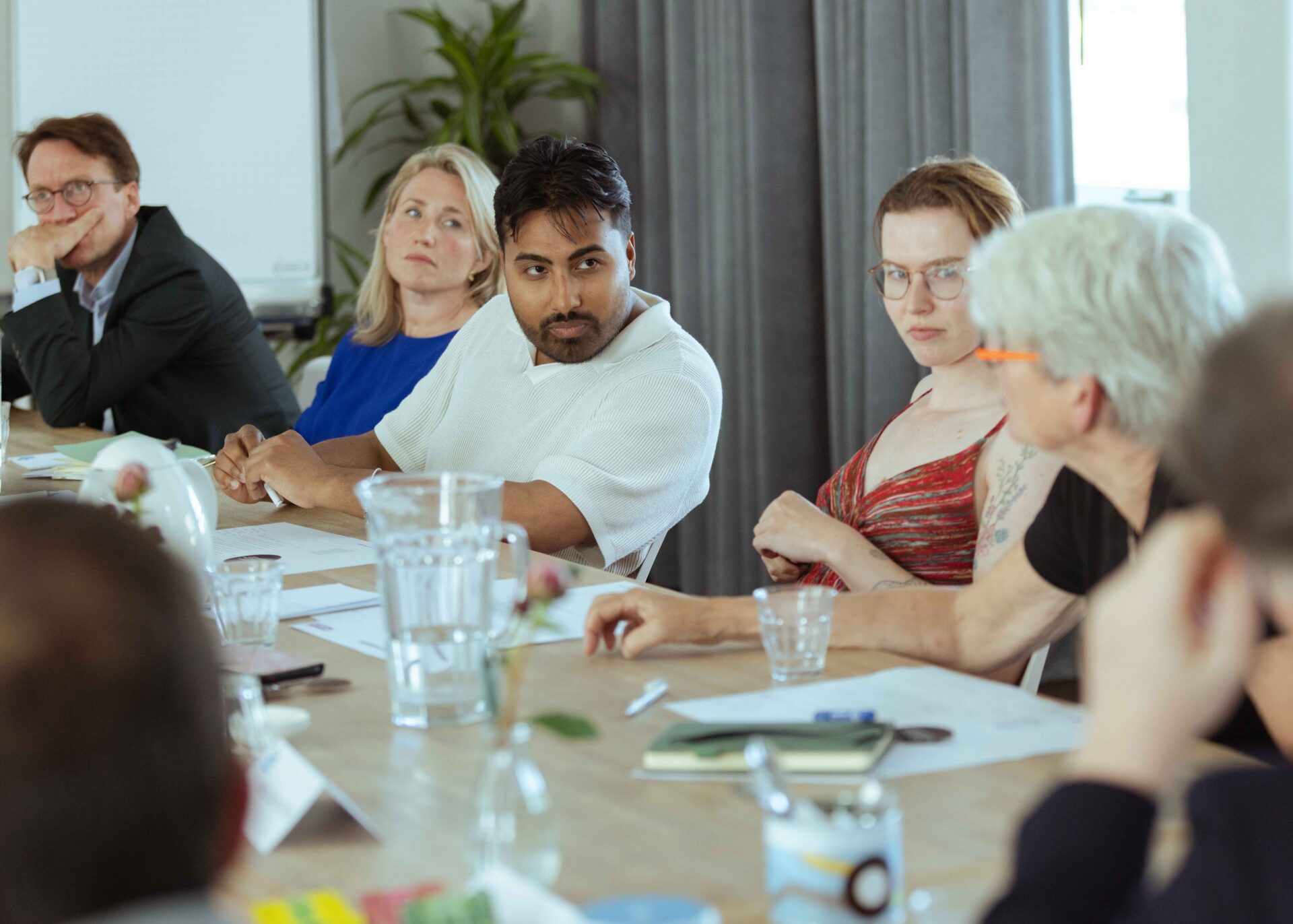
“Journalism’s first loyalty is to citizens,”wrote journalists Bill Kovach and Tom Rosenstiel at the beginning of this millennium. Guided by that principle, we organize private reflection sessions with thought leaders from the field of journalism. The digital media revolution calls for a great deal of (self-)reflection: What exactly is happening? What is changing? How can the sector best continue to fulfill its role in society?
We note that journalists are indeed grappling with these questions, but that they feel they have little opportunity to exchange ideas on these topics. SDM aims to create that opportunity. Topics such as criticism, skepticism, and connection were discussed: How should journalism handle criticism given its mission to strengthen trust in journalism? And hasn’t the curiosity and skepticism of many journalists shifted too far toward cynicism, which then seeps into society? Or does journalism overestimate its impact? How do you regain or maintain the trust of readers and viewers? How do you connect different generations, urban and rural areas, those in power, and “ordinary” citizens?
With a partially rotating group of selected journalists, we engage in philosophical reflection and discussion and exchange experiences about the journalistic profession. The role that the media play in our democratic constitutional state is, in essence, at the heart of SDM’s mission. That is why we support the debate on this topic and are happy to help journalists refine their thinking.
News and articles