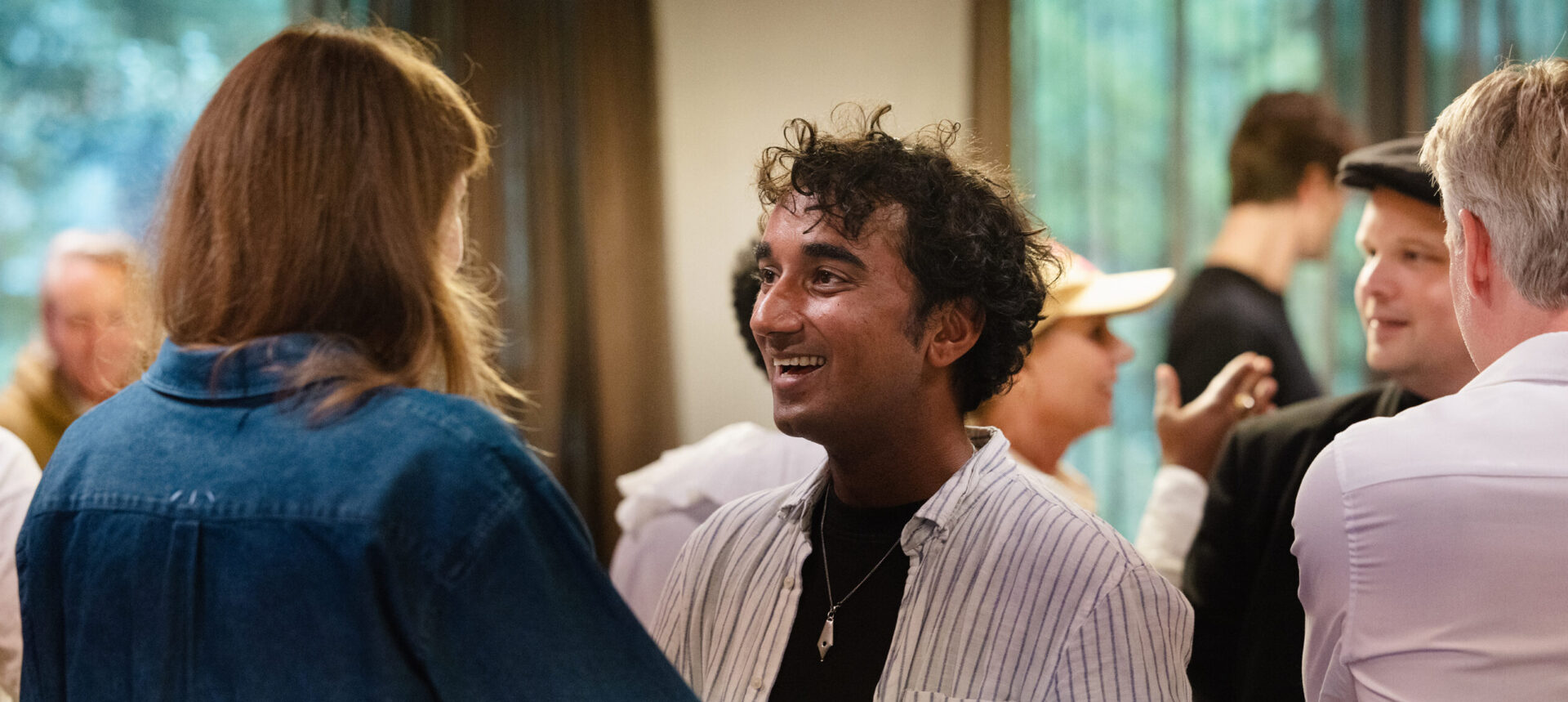
@politiekejongeren founder Nugah Shrestha: “Political power and the media are now so intertwined that journalistic values are being compromised.”
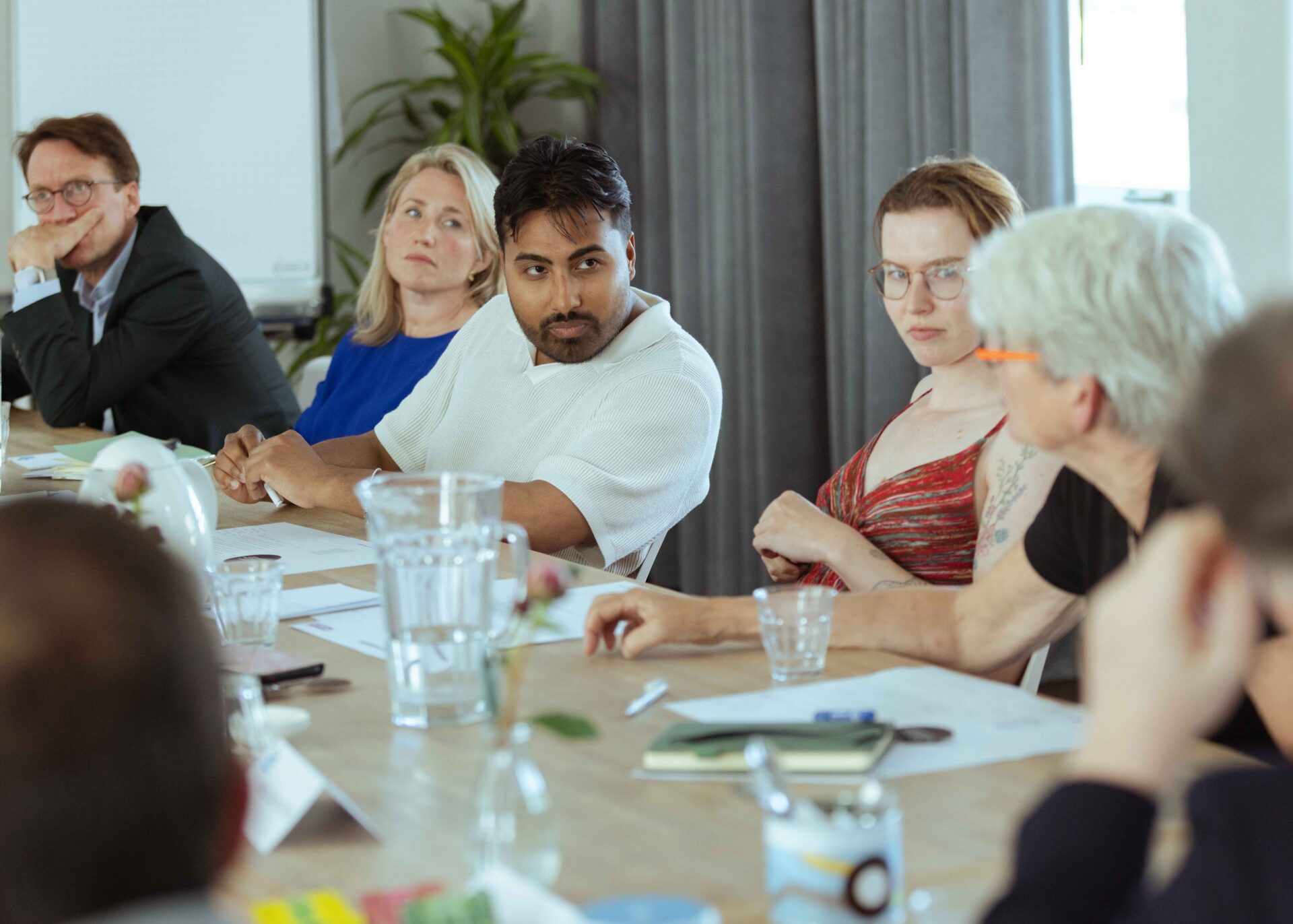
An Instagram account with 178,000 followers, a one-person editorial team, and an invitation to sit down with professors, editors-in-chief, and scientists. For Nugah Shrestha, founder of the Instagram account @politiekejongeren, this is largely due to the changing media landscape. During the three expert sessions of Het Grote Mediadebat, he spoke as a content creator about the role of news and media in democracy. His takeaway: the influence of social media on democracy is underestimated, and the political sphere needs to respond to it more actively.
We are familiar with the separation of powers: the division between the legislative, executive, and judicial branches. The civil service is sometimes referred to as the fourth branch. But according to Nugah, there is a fifth branch that deserves more attention: the media.
“I think we often underestimate how significant the role of the media and journalism is in shaping a certain view of society,” he says. “A view that, in turn, influences our political choices.”
Frames
“Migration is an example of this. It’s a topic in which the same frames recur time and again in the media, as was evident during the recent elections.” Nugah believes it is the traditional media’s responsibility to be critical and to verify facts. “Instead, we see that traditional media are increasingly normalizing certain frames and adopting certain language. I don’t think that’s right.”
Through his Instagram account, Nugah tries to ask precisely those critical questions. He’s succeeding: his account now has 178,000 followers. He’s invited to panel discussions and talk shows, and his articles and essays are published by those very same traditional media outlets. “That, too, is paradoxical. Without social media, that wouldn’t have been possible.”
“Even traditional media outlets don’t know whether their posts—whether they’re world news or not—will end up at the top of the feed.”
As a content creator, he, too, is dependent on algorithms that are largely opaque. In the expert sessions, Nugah therefore raised a topic that, in his view, has received little attention: self-censorship among creators. “If your account is deleted by an algorithm you have absolutely no insight into, that’s the end of it. But who decides that and why remains unclear.”
“Even traditional media outlets don’t know whether their posts—whether they’re world news or not—will end up at the top of the feed.” These days, control over what people actually see no longer lies solely with newsrooms, but also with the platforms.
Intertwined with Politics
This brings him to a recurring theme: political power. “We discussed the values of the media, journalism, and democracy at length during the expert sessions. How do we preserve them? That has to do with power and, in my view, with political power. Political power and the media are now so intertwined that journalistic values are becoming blurred.”
As an example, he cites the hearing of Facebook CEO Mark Zuckerberg, who was called to testify before the U.S. Congress in 2018 following the Cambridge Analytica scandal. The company had collected data from tens of millions of Facebook users without their consent and used it for targeted political advertising. The scandal highlighted how a Big Tech company uses personal data to influence politics, but also how social media has made its way into the political arena: Steve Bannon was involved with Cambridge Analytica and later played a key role in Donald Trump’s campaign.
According to Nugah, this intertwining is becoming increasingly widespread. In countries such as the United States and Brazil, far-right content creators and podcasters are gaining access to the political arena. Their ideology is being normalized. This is clearly evident in the documentary Louis Theroux: Inside the Manosphere and the book *Going Mainstream: How Extremists Are Taking Over* by Julia Ebner.
“It’s a factor that politicians are also subject to the power of those same platforms. Politicians eagerly use platforms like TikTok and Instagram to reach voters.” According to Nugah, this puts them in an awkward position. He believes it is important for politicians to maintain a critical perspective on the power these platforms wield, rather than simply using them for their next campaign.
“The government is lagging behind the private sector when it comes to digitization and technological developments. As a result, legislation is falling behind these developments. Instead of being reactive, policymakers should take a more proactive approach.”
What does that require? “Perhaps more experts in the political arena, or young voices, because they have a better understanding of the media landscape. Many factors come into play. That is precisely why it’s important to have this debate about power and the media.”
The question isn’t “if,” but “how”
The topic of AI was also discussed during the three expert sessions. Not everyone at the table was enthusiastic about it. Nugah takes a pragmatic view: the media are simply changing. According to him, the question isn’t whether you go along with it, but how.
“Trying to resist change is pointless. It’s great to see so many different people from the field weighing in. That leads to interesting discussions. That’s where the best ideas come from.”
“There’s little point in trying to resist change.”
He acknowledges that thinking about the future remains difficult. “Maybe in ten years, we’ll look back on this time and can’t even imagine that we used to spend more than five hours a day on our phones. Or maybe things will turn out differently, and AI will eventually decide what news we get to see.”
For Nugah, one thing is clear: “It’s up to the politicians now.”
News and articles